Less than two weeks before kickoff, CAF has confirmed WAFCON 2026 is moving from March to July. The Super Falcons now have four more months to sharpen their title defence, but the reasons behind the postponement reveal a continent’s growing political fault lines.
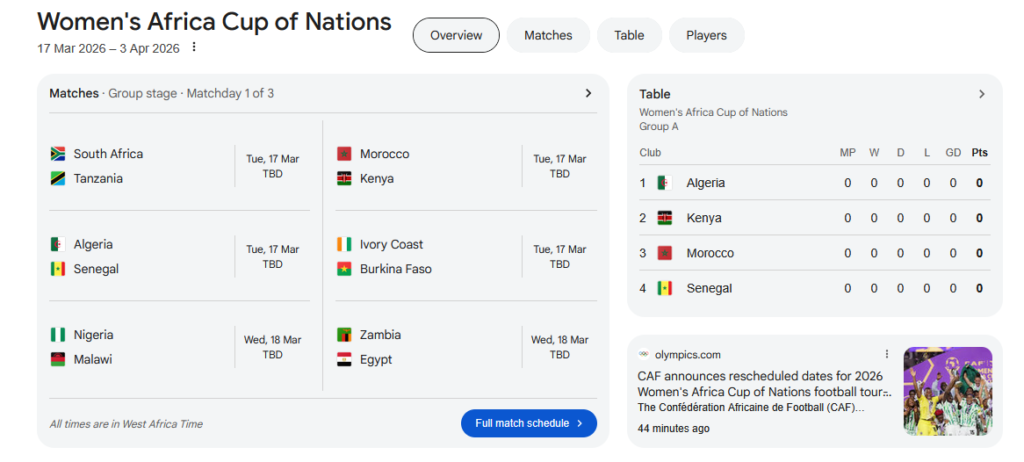
Nigeria’s Super Falcons will have to wait. CAF confirmed on Thursday that the 2026 Women’s Africa Cup of Nations has been postponed from its original March 17 – April 3 window and will now take place from July 25 to August 16, 2026, still in Morocco. The announcement, made just 12 days before the tournament was scheduled to open, sent shockwaves through the African women’s football community.
CAF’s official statement cited “unforeseen circumstances” and discussions with FIFA and other stakeholders as the reason for the shift, noting that all parties remain confident the tournament will be a success in its new window. What the statement didn’t say, and what African football observers understand clearly, is that the postponement sits inside a storm of political tension between CAF and Morocco that has been building since January.
Want our football coverage to show up first?
Add FootballInNigeria as a preferred source and our stories get a "Preferred" badge in your Google Top Stories, AI Overviews, and AI Mode results.
The Real Story Behind the Postponement
Morocco hosted the men’s AFCON 2025 and lost the final to Senegal in Rabat in front of their own fans. What followed was deeply uncomfortable. Senegalese supporters were arrested and imprisoned, prompting Senegal’s prime minister to publicly condemn Morocco’s actions. CAF launched disciplinary proceedings. Morocco pushed back. The head of CAF’s judicial body was subsequently removed in a move widely seen as a response to Moroccan political pressure.
Now Morocco is the host of WAFCON 2026, awarded the rights in October 2024. South Africa’s sports authorities have already made public statements indicating readiness to step in if Morocco relinquishes hosting duties. Whether this postponement is genuinely logistical or a negotiating signal in an ongoing diplomatic standoff between CAF and the Moroccan football federation is a question the continent’s football administrators are quietly asking.
What is certain is that all 16 participating nations had completed their preparations. The Super Falcons had already played two friendlies against Cameroon, winning the second 3-1. Ghana’s Black Queens were top of their Pink Ladies Cup tournament in Dubai. Squads had been named. Travel arrangements were booked. A four-month delay with less than two weeks’ notice represents a significant disruption that will test every federation’s administrative capacity.
What the Delay Means for the Super Falcons
Nigeria’s position is complicated. The Super Falcons are Africa’s defending champions, having won their 10th WAFCON title in 2024 with a stunning comeback against hosts Morocco in the final. Coach Justine Madugu had built solid momentum from two preparatory matches, and key players including Chiamaka Nnadozie, Rasheedat Ajibade, Rinsola Babajide, and Michelle Alozie were in sharp form. Now they return to their clubs. That momentum, built over weeks of preparation, will need to be rebuilt in June before the new kickoff in July.
There’s also the contract question. Madugu has been operating without a confirmed long-term deal from the NFF for several months. A four-month extension of her current limbo is not ideal preparation for a title defence. The NFF will need to resolve her contract situation decisively in the coming weeks, rather than leave it to drift until July.
The upside is real, though. Asisat Oshoala, who has dealt with injury concerns, gets more recovery time. Younger players who forced their way into contention during the February camp get more development opportunities. And if the Super Eagles’ men’s team can string together strong World Cup qualifier results in the March and June windows, it creates a positive national football atmosphere that can only help the Falcons heading into Morocco in July.
WAFCON 2026 also doubles as qualification for the 2027 FIFA Women’s World Cup in Brazil. The four semi-finalists earn automatic berths. That stakeholder profile doesn’t change with the rescheduled dates. Nigeria’s twin objectives, defending the continental crown and booking a World Cup place, remain exactly as they were.
Analysis: CAF’s Credibility Problem
Postponing a major continental tournament with less than two weeks to go is not a minor administrative adjustment. It’s a credibility problem. CAF awarded Morocco hosting rights 17 months ago. The tournament was not a surprise on the calendar. Whatever “unforeseen circumstances” triggered this decision, the timing reflects either a failure of planning or a political intervention so urgent it overrode months of preparation. Neither explanation reflects well on the confederation.
For the 16 participating nations, the practical burden falls hardest on the smaller federations with fewer resources to absorb the disruption. Nigeria and South Africa have the administrative infrastructure to adapt. Nations like Malawi, making their WAFCON debut, and Botswana, who qualified for the first time in years, have spent months preparing for a March start. Rescheduling four months out isn’t just an inconvenience for them. It could mean player contracts expiring, sponsors pulling out, and squad availability windows closing.
CAF needs to move quickly on two fronts: first, providing genuine transparency about why this happened, and second, ensuring that the July tournament is delivered without further disruption. African women’s football has been growing its audience and investment with real momentum. A botched hosting process would significantly set that progress back.
For now, the Super Falcons regroup. The title defence continues, just on a different timeline. As FootballInNigeria.com.ng continues to track every development in the Super Falcons’ WAFCON preparation, fans who want to follow the broader women’s tournament action can explore Bet9ja’s enhanced odds platform for continental football markets when the competition eventually gets underway in July.
Morocco will host. July 25 is the new date. Nigeria will be ready. They’ve been ready since February.
📌 Did You Know?
- WAFCON 2026 will be the first edition of the tournament to feature 16 teams, expanded from 12 at the 2022 edition, making the July tournament the largest Women’s Africa Cup of Nations in the competition’s history.
- Nigeria’s 10th WAFCON title in 2024 was earned with a 3-2 comeback win over hosts Morocco in the final, with Nigeria overturning a 2-0 halftime deficit. That result is the backdrop to the political tensions now clouding Morocco’s 2026 hosting duties.
- Jennifer Echegini, who has already scored at both the Olympics and WAFCON, could become only the third Nigerian player after Mercy Akide and Perpetua Nkwocha to score in all three major tournaments (World Cup, Olympics, WAFCON) if Nigeria qualify for the 2027 Women’s World Cup via their WAFCON semi-final finish.
- The last time a major CAF tournament was postponed with less than two weeks’ notice was the men’s AFCON 2021, which was originally scheduled for Cameroon in June-July 2021 before CAF moved it to January 2022, citing COVID-19 concerns and infrastructure delays.
- South Africa has already publicly offered to step in as alternative WAFCON 2026 hosts if Morocco withdraws. The South African sports ministry made the statement within 48 hours of reports of political tension between CAF and Morocco surfacing in early March 2026.
- Justine Madugu, the Super Falcons’ head coach, is one of only three women currently coaching a national women’s team on the African continent that has won WAFCON in the past decade. Her contract situation with the NFF, unresolved since late 2025, becomes a more pressing issue with the July rescheduling.
- The four WAFCON 2026 semi-finalists will earn automatic qualification for the 2027 FIFA Women’s World Cup in Brazil, which runs from July 17 to August 17, 2027, across host cities including São Paulo, Rio de Janeiro, and Belo Horizonte.