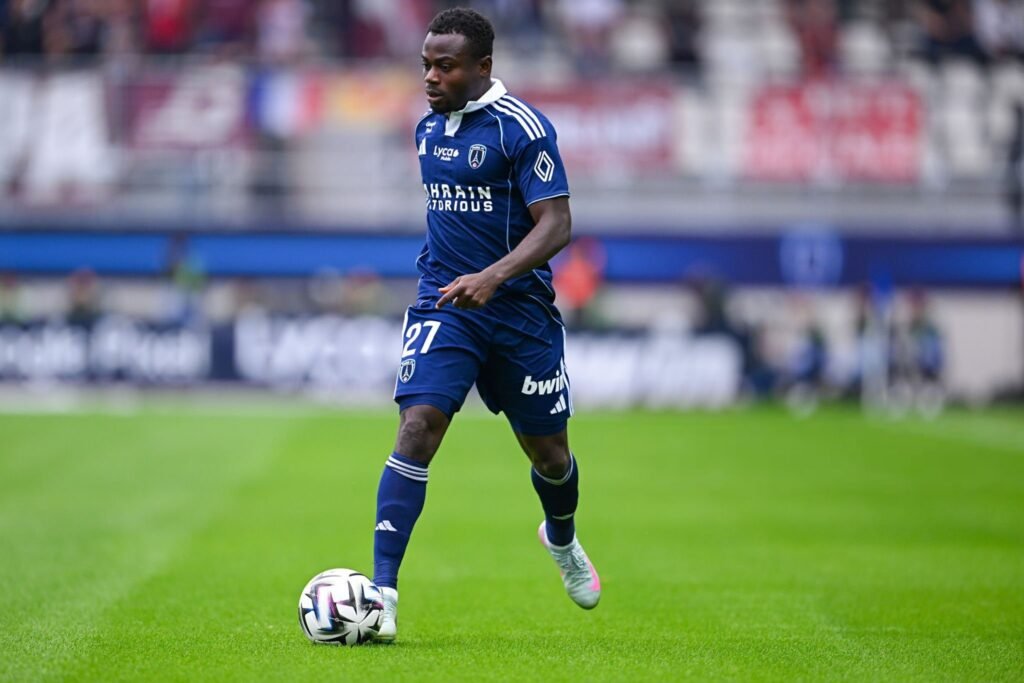
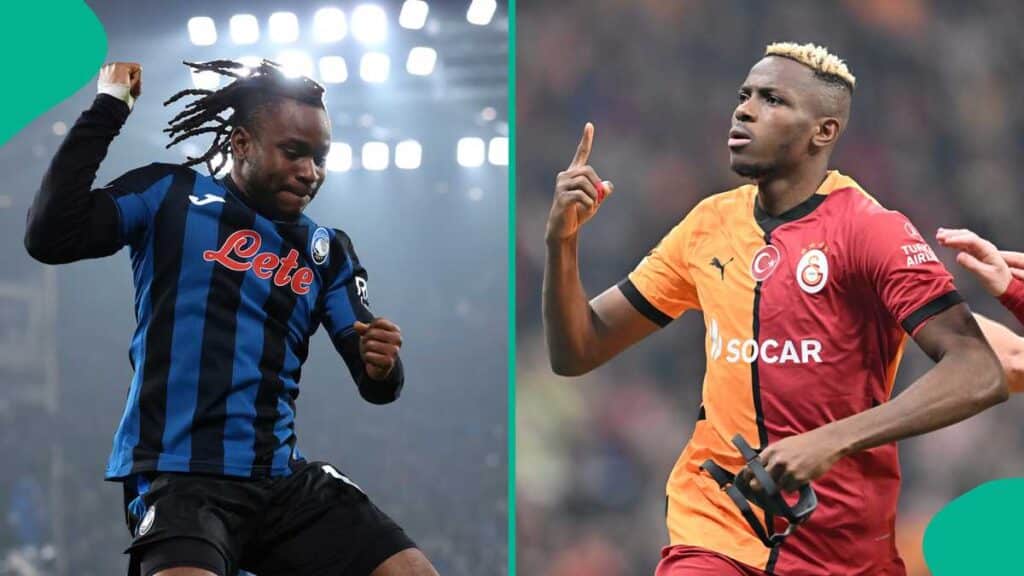
Nigeria has been giving FIFA players their favourite cards for over fifteen years. From a pace-abusing striker at Newcastle to a Napoli forward who made entire squad-building strategies collapse, here are the cards that defined generations.
Want our football coverage to show up first?
Add FootballInNigeria as a preferred source and our stories get a "Preferred" badge in your Google Top Stories, AI Overviews, and AI Mode results.
Long before the conversation shifted to chemistry links and evolution paths, Nigerian players were quietly becoming the most coveted cards in FIFA Ultimate Team. Some broke the game through sheer pace. Others became budget staples that overperformed against squads worth ten times as much. A few transcended those categories entirely and became genuinely elite options that no serious player could afford to ignore, as celebrated by FootballInNigeria.com.ng.
The Super Eagles have a long history of producing footballers who translate brilliantly onto virtual pitches, and the digital legacy of Nigerian players in the FIFA series is one of the more underappreciated stories in football gaming culture. Here is a look at the cards that mattered most, and why.
Obafemi Martins: The Original Pace Monster
Before anyone was talking about pace abusing in FIFA, Obafemi Martins was already making defenders look foolish on digital pitches everywhere. His real-world speed was the kind that made opposition managers shake their heads at press conferences, and EA Sports captured it faithfully across FIFA 08, 09 and 10, giving him pace ratings that hovered in the low to mid nineties and a physical profile that made him an absolute nightmare for anyone without pace-matching defenders.
The former Inter Milan and Newcastle United striker became the original template for what a Nigerian player could mean in FIFA Ultimate Team raw, direct, explosive, and capable of turning a mediocre squad into a genuinely threatening one. His backflip celebration became as recognisable as the sprint animation, and his place in the early FIFA card hierarchy was well and truly earned.
Fans who remember those early FIFA years and want to follow modern Nigerian stars in real football can check the YOHAIG promo code ahead of the new season.
Emmanuel Emenike: The Card That Broke the Internet Before That Was Even a Thing
Ask anyone who was playing FIFA 12 or 13 on a Saturday morning and Emmanuel Emenike will trigger an immediate reaction. The Spartak Moscow and Fenerbahce striker arrived in Ultimate Team with a combination of pace, physicality and raw power that made defenders genuinely helpless in that particular version’s meta. His base card was already effective. His In Form versions were the kind of pull that made players stare at their screens in disbelief for several seconds before reacting.
The cultural moment that sealed his FIFA legacy came through the early YouTube pack opening era, where British content creators built entire videos around Nigerian players and the reactions they generated. That cycle of community hype, where a video made you want the card, which made the card more expensive, which made the pull more satisfying, defined early FIFA content culture in a way that the game’s own marketing never quite matched. Emenike sat at the centre of that moment, and Nigerian football has been culturally embedded in FIFA fandom ever since.
Ahmed Musa: Leicester’s Pace Merchant
The FIFA 16 and 17 cycle gave Ahmed Musa a broader audience than his club performances might have otherwise commanded. His arrival at Leicester City during their fairytale Premier League title season meant his card carried the goodwill of a club everyone was talking about, and EA delivered a card that reflected his real strengths faithfully: explosive acceleration, sharp dribbling in tight spaces, and the ability to manufacture chances from difficult angles. His two-goal display against Argentina at the 2018 World Cup in Russia only added retrospective lustre to his card’s legacy, confirming that the numbers had been telling the truth all along.
Fans following Nigeria’s current squad and betting on Super Eagles stars across European leagues can check the Bet9ja’s current promo code ahead of the new season.
Wilfred Ndidi and John Obi Mikel: The Defensive Anchors
Not every legendary Nigerian FIFA card was built for showreel moments. Wilfred Ndidi became the defensive midfielder that FIFA players genuinely chased from FIFA 17 onwards, with interception and physicality stats that made him an almost essential anchor in any squad built around pressing football. His real world role at Leicester City translated directly into his card, rewarding players who understood that winning the ball in midfield was just as important as what you did with it afterwards.
John Obi Mikel served a similar function in earlier generations of the game, a composed and intelligent midfielder whose card rewarded tactical players over those who simply wanted to outrun everyone. Together, these two players proved that Nigeria’s representation in FIFA went beyond pace exploits and power cards, and that the country’s midfield intelligence could be just as useful to FIFA players looking to win matches through structure rather than sheer athleticism.
Victor Osimhen: The New Nigerian Gold Standard
Everything about how Nigerian players were perceived in FIFA changed during Victor Osimhen’s Napoli years. His special cards during the FIFA 23 and 24 cycles competed with the absolute elite of Ultimate Team, featuring pace and finishing numbers that justified enormous in-game coin prices and reflected a player genuinely operating at the top of world football rather than performing well in a mid-table club. His Team of the Week releases and special editions were genuinely meta-defining, not just among Nigerian cards but across the entire game.
Where Emenike had been a budget hero and Martins a pace exploit, Osimhen became the player you built an entire team around. That evolution, from cult favourite to genuine elite card, mirrors the broader arc of Nigerian football’s growing stature in the global game, and it confirms that as long as Nigeria continues to produce players of Osimhen’s calibre, the Super Eagles will keep delivering Ultimate Team gold for generations of FIFA players to come.
Fans who want to follow Nigerian stars across European football this season can find a useful breakdown at this Bet9ja promo code today guide ahead of the new campaign.
📌 Did You Know?
- Obafemi Martins’ FIFA pace ratings were so consistently high that he appeared as a recommended option in “pace abuse” guides published by FIFA strategy sites for three consecutive editions of the game.
- Emmanuel Emenike’s FIFA card peaked in popularity around 2012-13, coinciding with his most productive spell at Spartak Moscow, where he scored 17 goals in the Russian Premier League during the 2011/12 season.
- Ahmed Musa’s two goals against Argentina at the 2018 FIFA World Cup in Kazan made him the first Nigerian player since the 1998 World Cup to score twice in a single World Cup match.
- Wilfred Ndidi’s real-world interception statistics at Leicester City across several Premier League seasons were among the highest recorded by any midfielder in the competition, a reality that made his FIFA card stats feel entirely accurate rather than inflated.
- Victor Osimhen’s 2022/23 Serie A season, in which he scored 26 goals to win the Capocannoniere award and help Napoli win their first league title in 33 years, was the campaign that turned him from a strong card into one of the most elite options in the entire FIFA 23 Ultimate Team player pool.
- John Obi Mikel’s long spell at Chelsea, during which he won the Premier League, FA Cup, UEFA Champions League and UEFA Europa League, gave his FIFA cards an unusually decorated trophy background compared to many players of a similar in-game rating.
- Ademola Lookman and Samuel Chukwueze have both emerged as desirable FIFA cards in recent editions, continuing Nigeria’s tradition of providing Ultimate Team options that overperform their initial market prices once players discover their real-world statistical profiles.