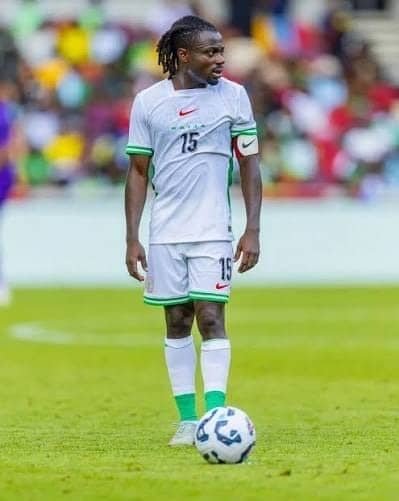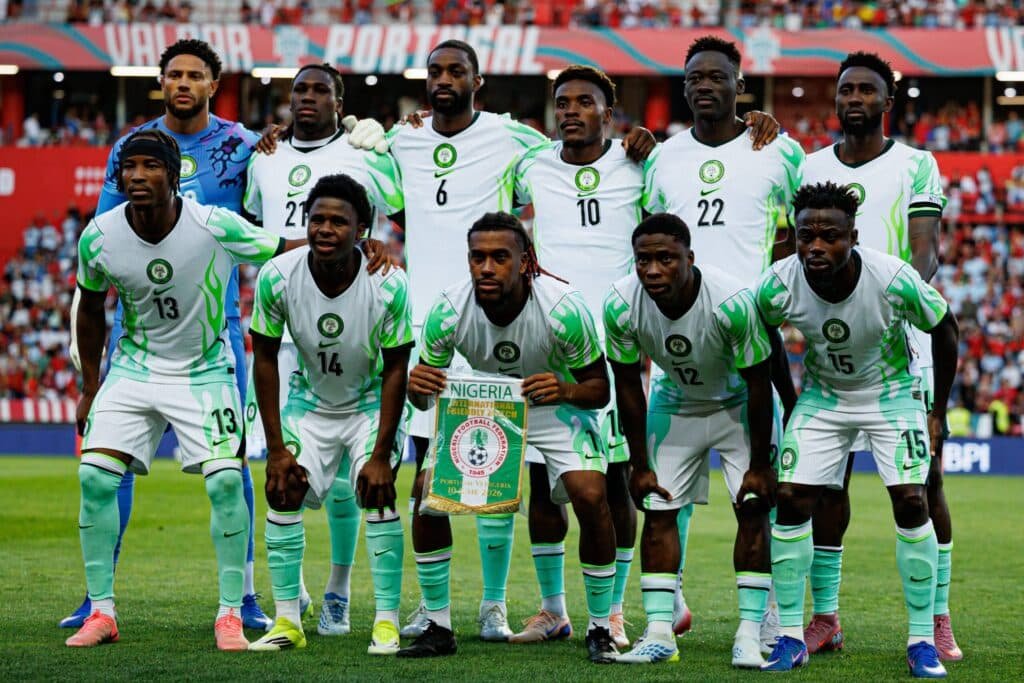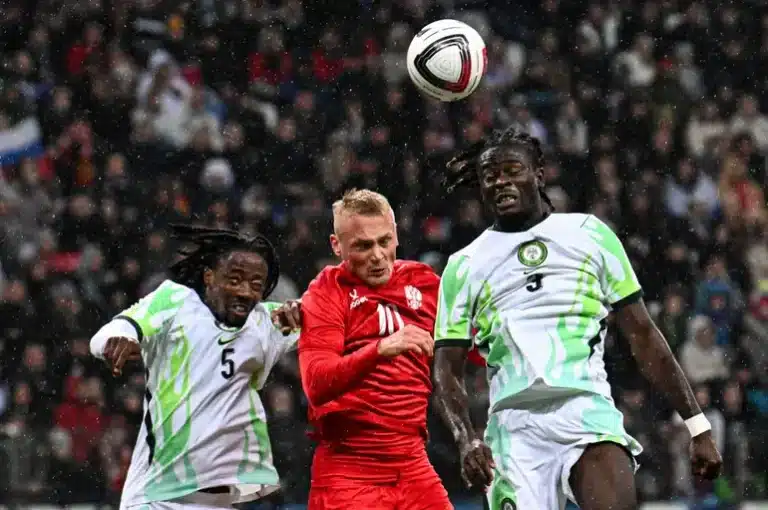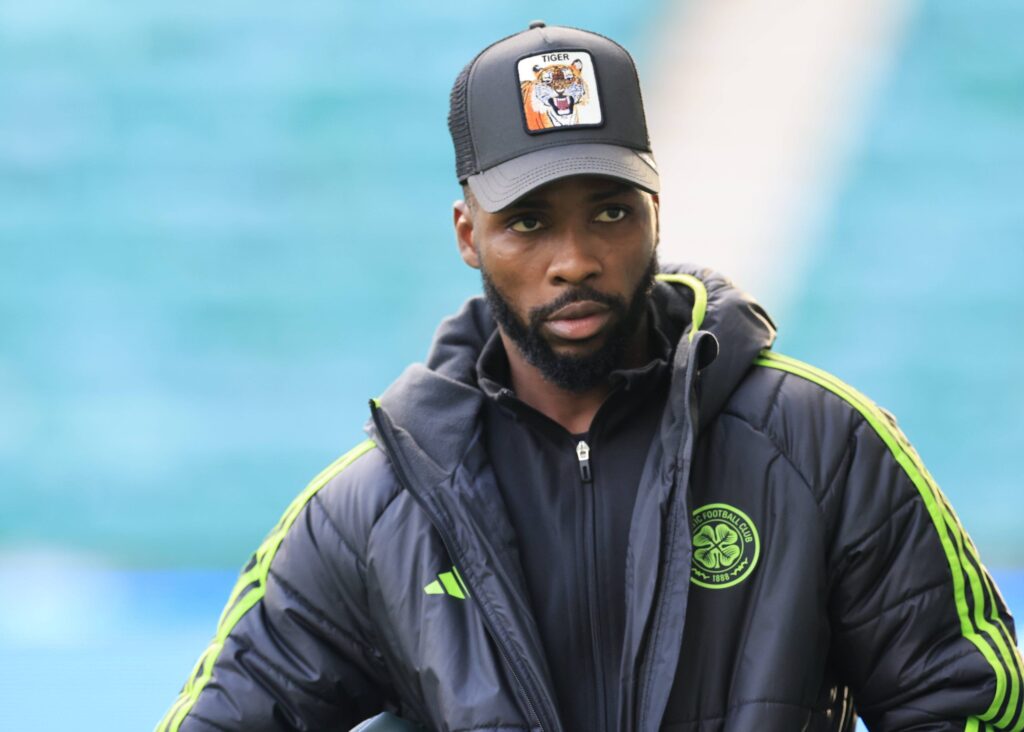
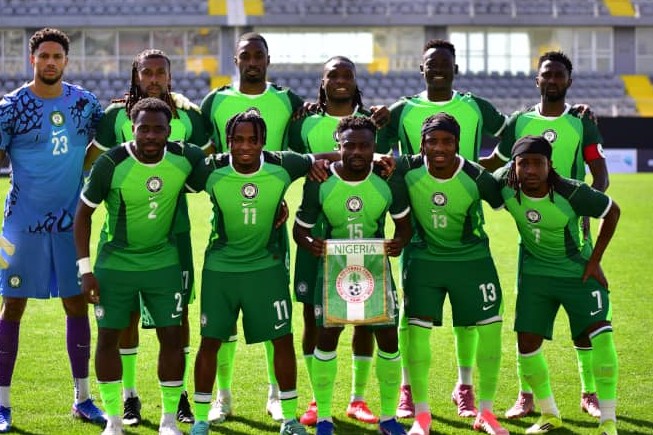
Veteran Nollywood actor Gbenga Dina has delivered a blunt verdict on Nigeria’s national football team, saying the Super Eagles of today are a pale shadow of the side that once made the whole country stop in its tracks.
Gbenga Dina watched the Super Eagles in their golden years. He remembers the roads going quiet when Nigeria played, the neighbours dragging their television sets outside so entire streets could gather and watch. What he sees now is different, and he does not pretend otherwise.
“In those days, the Super Eagles were something else,” Dina told FootballInNigeria.com.ng in an exclusive interview. “Everywhere would stand still when the Super Eagles were playing. Even the roads would be deserted because the Super Eagles had a match.” That atmosphere, he says, has gone.
Want our football coverage to show up first?
Add FootballInNigeria as a preferred source and our stories get a "Preferred" badge in your Google Top Stories, AI Overviews, and AI Mode results.
Fans who still follow the national team through the highs and the frustrations can use the YOHAIG Bet9ja promotion code to place a stake whenever the Eagles take the field next.
The Problem Is Not the Players
Dina is clear that Nigeria still has the talent to win a major tournament. He points to the quality of the current crop of players, most of them based in Europe, and argues that the raw material is there. The failure, he says, is in how those players are treated.
“The players are not fully committed to the team,” he said. “It is more like, ‘Okay, fine, they have called me, let me just go.’ Because they know that at the end of the day, they will still be owed some money.” Bonuses promised after tournaments go unpaid. Houses pledged as incentives stay undelivered. By the time players board their return flights, the motivational contracts they were handed have quietly evaporated.
Nigerian football fans who are already active on Bet9ja ahead of the next Super Eagles qualifiers can find all the details they need through the YOHAIG welcome offer page before registering.
One Name He Believes In
Dina does not name politicians or football administrators as villains in the abstract. He gets specific. Asked if he knows anyone who could genuinely turn things around, he mentions Bukola Olopade without hesitation. “That man has sense,” he says. “I have seen him a couple of times around players.” In Nigerian football commentary, that kind of unsolicited endorsement is rare.
He also praises the Super Falcons, Nigeria’s women’s football team, pointing to their performances as proof of what proper support and motivation can produce. “Those ladies are doing marvellously well,” he said. “So I think sports administration in Nigeria needs to be looked into holistically.”
Supporters who want to understand how to make the most of their betting bonus before the next international window should read through this Bet9ja bonus conversion guide ahead of the fixtures.
A Cultural Love That Politics Cannot Kill
Despite his frustrations, Dina cannot explain why football still holds Nigeria together. Politicians use tournaments to distract from problems. Fuel prices spike. Wages go unpaid. And yet, when Nigeria kicks off, the bars fill up and the arguments start. He admits he has no satisfying answer for why that is.
What he does know is that the connection between Nigerians and football runs deeper than results. Growing up in the 1970s, watching matches through a neighbour’s window on a box television called “National,” he felt it himself. That feeling, he says, is what the administrators keep failing to honour.
📌 Did You Know?
- Samuel Okwaraji, whom Dina referenced among his favourite Super Eagles players, collapsed and died on the pitch during a 1989 World Cup qualifier against Angola at the National Stadium in Lagos, making him one of the most tragic figures in Nigerian football history.
- Nigeria qualified for their first FIFA World Cup in 1994 under coach Clemens Westerhof, finishing top of their group ahead of Argentina, Bulgaria, and Greece, and reaching the round of 16 before losing to Italy.
- The Nigeria national team was nicknamed “The Super Eagles” officially in 1994, replacing the earlier nickname “The Green Eagles” which the team had carried since the 1960s.
- Nigeria’s NTA (Nigerian Television Authority) began broadcasting in 1977 and was the dominant sports broadcaster in the country for decades, making it the primary window through which older Nigerians experienced major football matches.
- Bukola Olopade served as the Coordinator of the Super Eagles at the Nigeria Football Federation and was involved in the team’s preparations during the AFCON 2023 campaign, where Nigeria reached the final before losing to hosts Ivory Coast.
- The Super Falcons, Nigeria’s women’s national team, have won the Africa Women Cup of Nations a record eleven times, more than any other African nation, making them by far the most successful women’s team on the continent.
- Nigeria’s football budget, while appearing large in annual government allocations, has repeatedly been flagged by audit reports as one of the sectors with the highest discrepancy between announced and actually disbursed funds.