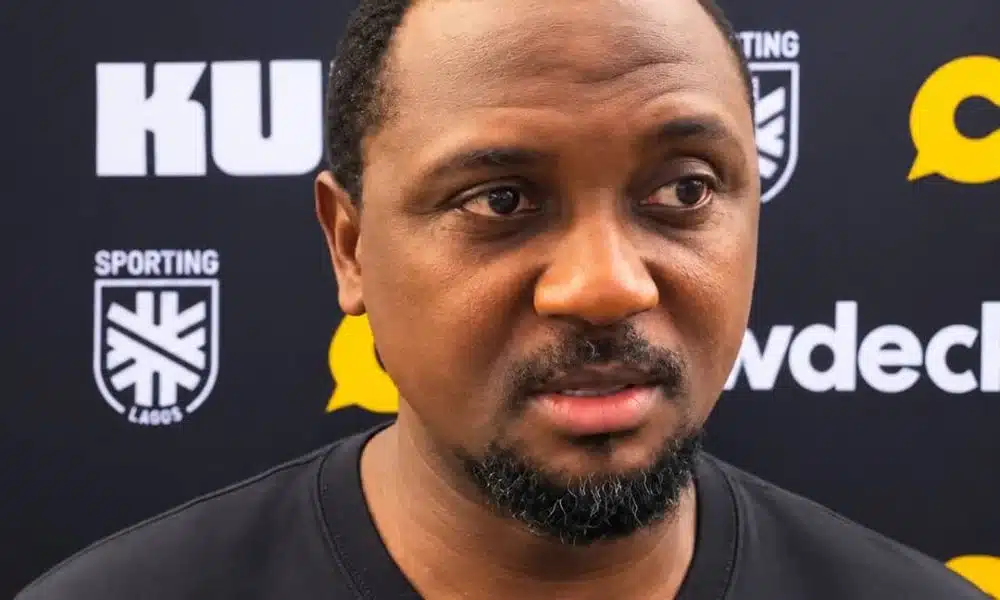
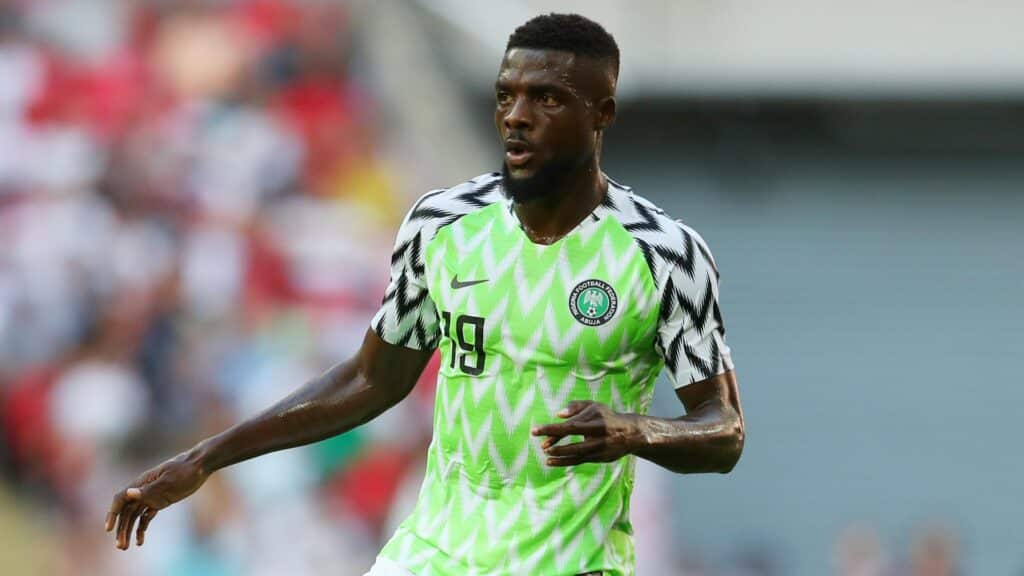
Former Super Eagles midfielder John Ogu has urged Nigerians to hold the players equally accountable for the team’s failure to qualify for the 2026 FIFA World Cup, pushing back against narratives that pin all responsibility on the NFF.
John Ogu is not interested in the easy narrative. While much of the post-mortem on Nigeria’s World Cup qualifying disaster has focused on the Nigerian Football Federation, the former Super Eagles midfielder has come out firmly to say the players need to own their share of the blame. Ogu, who earned 25 caps for Nigeria and was part of the 2018 World Cup and 2019 AFCON squads, made his position clear on the “Home Turf” podcast, and his perspective deserves serious consideration from anyone who watched that campaign disintegrate in real time.
The qualifying campaign was a slow-motion collapse. Nigeria failed to win any of their early playoff matches under Jose Peseiro. When Finidi George replaced Peseiro, he lasted just three months without a victory before being dismissed. Eric Chelle came in as a third head coach in January 2025 and tried to stabilise things, but Nigeria’s World Cup journey ended in a heartbreaking penalty shootout defeat to DR Congo in the final playoff round. Fans of the Super Eagles ahead of the Unity Cup next month can check out the Bet9ja’s current promo code to follow the action with a new account bonus.
Want our football coverage to show up first?
Add FootballInNigeria as a preferred source and our stories get a "Preferred" badge in your Google Top Stories, AI Overviews, and AI Mode results.
What Ogu Actually Said
Ogu’s argument was pointed and personal. He said the NFF provided quality welfare throughout his time in the squad, including the best hotels and timely bonuses. His position was that players were given the conditions they needed to perform and still did not deliver results. He stated plainly that the blame should be shared equally between the federation and the players, which is a different position from what most of the public debate has reflected.
He did not let the NFF off entirely. He acknowledged a faulty structure exists within the federation. But his point was that blaming administration exclusively while excusing players who consistently fell short on the pitch is dishonest. Three coaches in one qualifying campaign is an administration failure, yes. Not winning a single game across multiple matches with the talent available is also a player failure. Both things can be true simultaneously. The Super Eagles do have quality players in Europe’s top leagues, and their inability to convert that talent into qualifying results is a legitimate question that goes beyond coaching instability. New Bet9ja users who want to back Nigeria’s upcoming fixtures can also read through the YOHAIG promo code page for step-by-step registration guidance.
Why This Debate Matters Going Forward
Nigeria will not be at the 2026 World Cup in the USA, Canada and Mexico, a tournament being held on the continent that should theoretically have given African football a boost in terms of attention and commercial opportunity. Missing it is a genuine setback for a football programme that has been trying to rebuild its standing in African football after the AFCON 2025 third-place finish.
The Super Eagles are now preparing for the Unity Cup next month, followed by international friendlies against Poland and Portugal in June. These are not high-stakes qualifiers, and Chelle will have room to experiment and build. But if the culture of deflecting accountability does not change, whether it runs in the direction of blaming the NFF alone or the coaches alone, the same patterns will show up in the next qualifying campaign. Ogu’s challenge is uncomfortable precisely because it is fair. Read the latest news and analysis on Nigerian football at FootballInNigeria.com.ng as the Super Eagles rebuild begins in earnest.
📌 Did You Know?
- John Ogu won three Israeli Premier League titles during his club career, all with Hapoel Beer Sheva, making him one of the most decorated Nigerian players in Israeli football history.
- Nigeria has failed to qualify for the FIFA World Cup only three times since their debut at the 1994 tournament: in 2006, 2010, and now 2026, making this qualifying cycle the third time they have missed the tournament in that span.
- Finidi George, who replaced Jose Peseiro as Super Eagles head coach, had no previous head coaching experience at senior international level before taking the Nigeria job, having previously managed Enyimba FC in the NPFL.
- The 2026 FIFA World Cup will be the first edition to feature 48 teams, expanded from the 32-team format used since 1998, meaning more qualification spots were available globally for this cycle than any previous edition.
- DR Congo, the team that eliminated Nigeria in the final World Cup playoff round, have qualified for the 2026 tournament, meaning the Super Eagles were beaten out by a side that is now set to represent Africa on the world stage.
- Eric Chelle, Nigeria’s current head coach, is a former Mali international who won caps for the Eagles of Mali before transitioning into coaching. He is the first non-Nigerian to manage the Super Eagles in the post-Stephen Keshi era.
- The Unity Cup, which Nigeria will participate in next month, is a four-nation invitational tournament traditionally held in London. It has historically served as a competitive preparation ground for African national teams between major qualifying cycles.