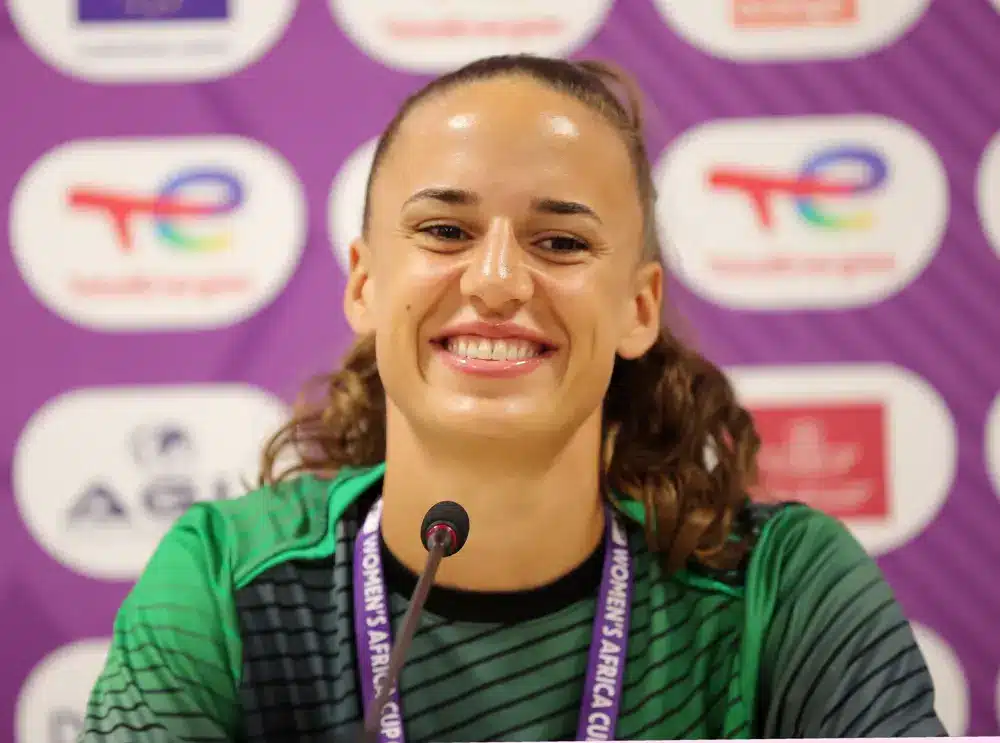
Ashleigh Plumptre did not use diplomatic language. The Super Falcons defender said clearly what most women players in Africa have been thinking since CAF announced that WAFCON 2026 was being pushed back by 4 months: this would not happen in any other major women’s football competition. She is correct.
— Ashleigh Plumptre, BBC Match of the Day interview, March 2026
She is making a specific point worth unpacking. CAF has given a statement citing “unexpected problems with planning and organising the event” after consultations with global football bodies and stakeholders. That is the official language. What it means in practice is that a tournament due to start in ten days has been pushed back to July, leaving players, clubs, national associations, broadcasters, and sponsors scrambling to adjust.
The Practical Fallout for the Super Falcons
This is not an abstract grievance. The Super Falcons were in camp. Players had already been released from club duties, in some cases negotiating with clubs well in advance to ensure availability for the March window. European clubs have now been asked to release players again for a July-August window, which directly conflicts with pre-season preparation, early-season fixtures, and the start of the 2026/27 European club season.
Want our football coverage to show up first?
Add FootballInNigeria as a preferred source and our stories get a "Preferred" badge in your Google Top Stories, AI Overviews, and AI Mode results.
As FootballInNigeria.com.ng covered last month, Rinsola Babajide was the first Super Falcons player to go public with frustration over the postponement, describing CAF’s handling as “embarrassing.” Plumptre has now added a more forensic critique, focusing specifically on the late timing of the announcement and the perceived double standard in how the continental body handles decisions in men’s and women’s football.
The Broader Pattern
This is not the first time WAFCON has been moved at short notice. The 2022 edition, held in Morocco, was itself delayed from 2020 due to the pandemic, then further reorganised in the build-up. The pattern of late-stage disruptions to women’s African football competitions has been a persistent source of frustration for players and coaches across the continent, feeding into a wider conversation about whether CAF’s women’s football programme receives the same level of resource commitment, planning rigour, and institutional respect as the men’s programme.
Players already released by clubs and in national team camps must return and have their release renegotiated for July.
July-August window clashes with European pre-season and the start of club seasons in multiple countries.
Broadcasting and commercial agreements had been structured around March dates and now require renegotiation.
Squad cohesion built during March camp preparation will dissipate over four months before reassembly in July.
Plumptre’s observation that this would not happen in other major women’s football competitions is factually accurate. UEFA would not postpone a Women’s EURO ten days before kick-off. FIFA would not push back a Women’s World Cup in the final fortnight. CONCACAF would not delay its women’s championship after players had already convened in camp.
CAF did. And CAF has done it before. The repeated last-minute disruptions to women’s African football are not bad luck. They are the product of institutional priorities that place women’s football lower on the organisational agenda than men’s football, and lower than the logistical convenience of tournament hosts and broadcasters who have made their own late decisions.
The players competing in WAFCON are professionals. Many of them play in major European leagues. They deserve the same organisational respect as their male counterparts. Plumptre is not asking for sympathy. She is asking for competence. That is a reasonable request.
- Ashleigh Plumptre was born in Leicester, England, to Nigerian parents and chose to represent Nigeria at the international level, having previously been called up by England at the youth level. Her choice of the Super Falcons is one of the more significant women’s football eligibility decisions involving a Nigeria-eligible player in recent years.
- WAFCON 2026 is scheduled to take place in Morocco, a country that has established itself as the most progressive host of women’s football tournaments in Africa following their hosting of the successful 2022 edition, which Nigeria did not win despite reaching the final.
- The 2022 WAFCON final, which South Africa won against Nigeria on penalties, remains one of the most-watched women’s football matches in African history, helping to raise the profile of the competition significantly and adding pressure on CAF to maintain momentum with the 2026 edition.
- Rinsola Babajide, the former Liverpool forward who also criticised the postponement publicly this week, described CAF’s decision as “embarrassing” in a social media post that attracted widespread engagement from Nigerian football fans and women’s football advocates across Africa.
- The July 25 to August 16 window now designated for WAFCON 2026 directly overlaps with the traditional European pre-season period, when clubs are preparing for the new domestic season. Super Falcons players at European clubs will require specific release arrangements from their clubs to participate.
- CAF cited “unexpected problems with planning and organising the event” as the reason for the postponement, following consultations with global football bodies including FIFA. The vagueness of that explanation has drawn its own criticism, with several commentators noting that a more transparent explanation would have been appropriate given the disruption caused.
- Nigeria’s Super Falcons have won the Women’s Africa Cup of Nations a record eleven times, making them the most successful nation in the competition’s history. The 2026 edition, whenever it eventually takes place, represents another opportunity to reclaim a title they last won in 2016.