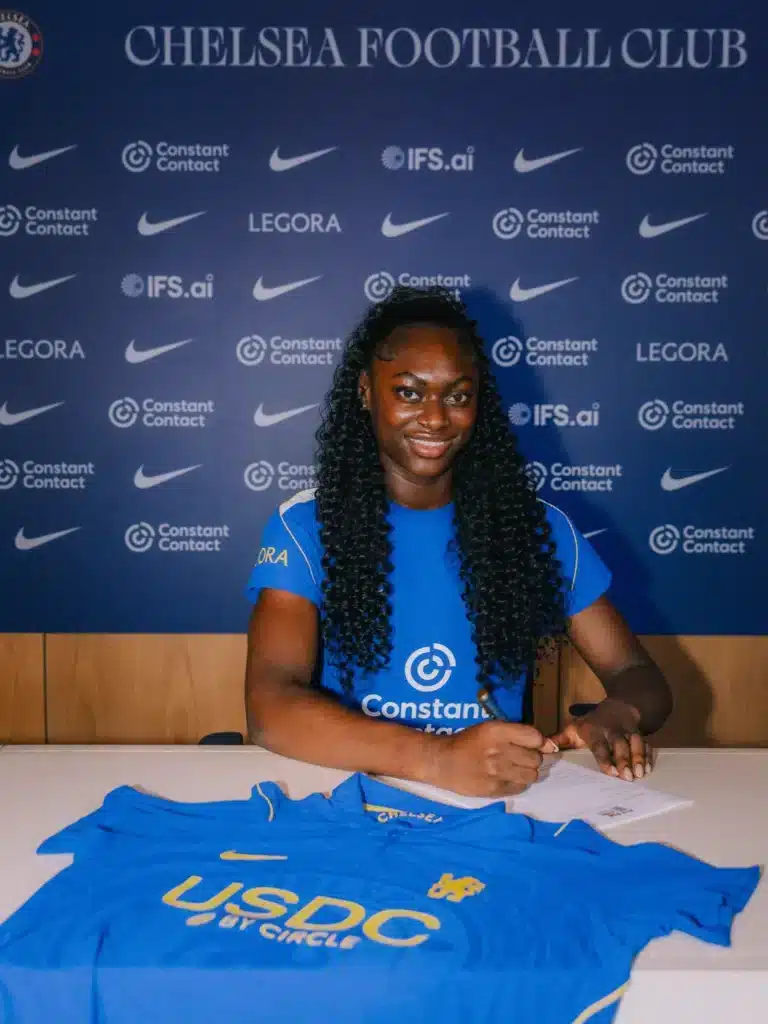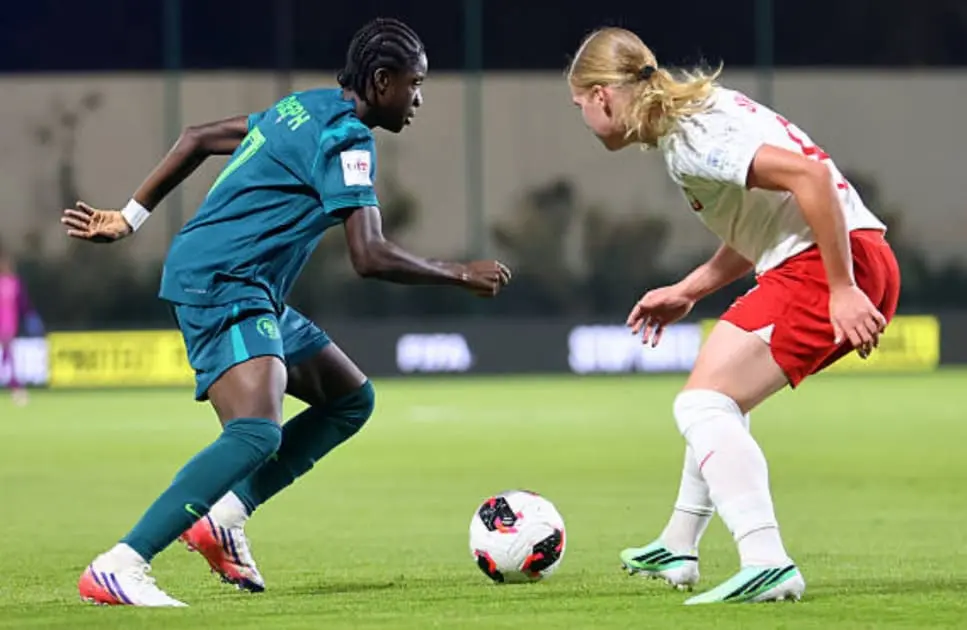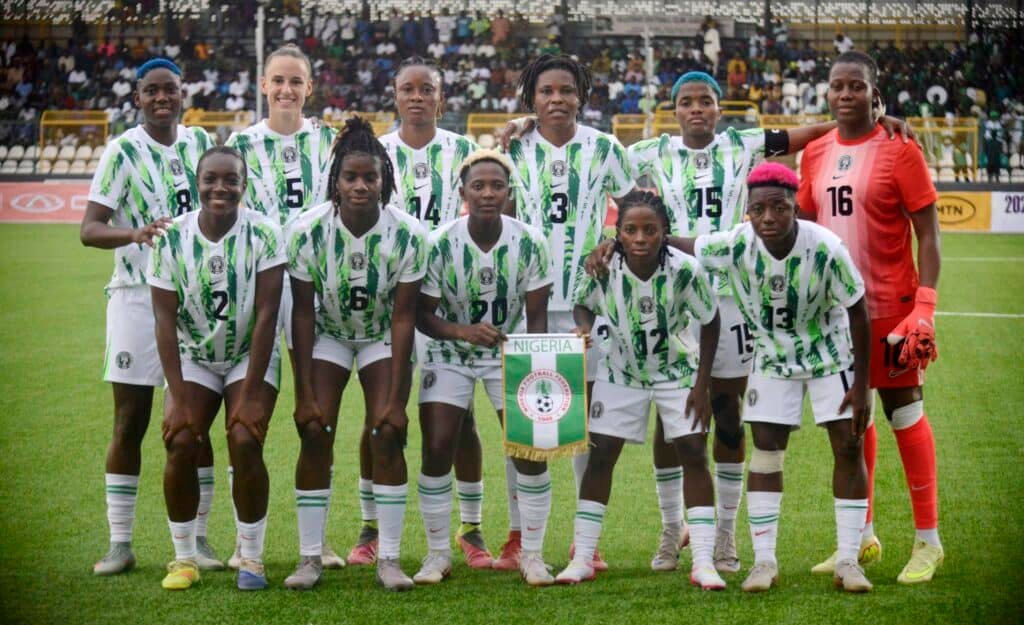
Rinsola Babajide didn’t mince words after CAF shifted WAFCON 2026 from March to July, upending months of preparation for the Super Falcons and their club-based stars across Europe.
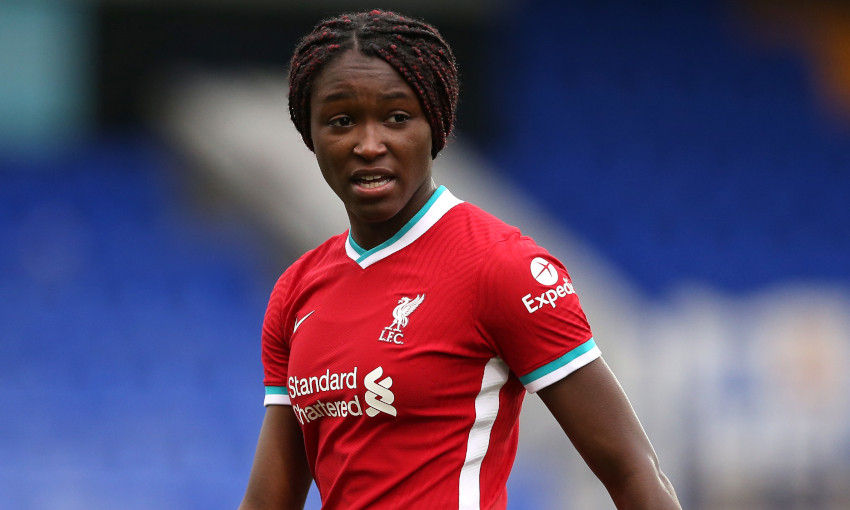
Rinsola Babajide has had enough. The Super Falcons forward, currently at AS Roma after her time at Liverpool, took to X on March 5 to fire a pointed message at the Confederation of African Football following the shock postponement of the 2026 Women’s Africa Cup of Nations. Her post was short, blunt, and gained traction fast: “It’s actually embarrassing at this point…”
She wasn’t alone in her frustration. But she was the loudest Nigerian voice to go public, and that matters. When a player at her level, representing one of Africa’s biggest women’s football programmes, calls out the continental governing body by name, it’s a signal that the patience of professional players with CAF’s administrative habits has run out.
Want our football coverage to show up first?
Add FootballInNigeria as a preferred source and our stories get a "Preferred" badge in your Google Top Stories, AI Overviews, and AI Mode results.
What CAF Actually Decided
CAF confirmed the postponement after what it described as consultations with FIFA and other stakeholders, citing unforeseen circumstances. The tournament, originally scheduled to run from March 17 to April 3 in Morocco, has now been rescheduled to July 25 to August 16, 2026. That’s a four-month delay, announced with minimal notice, affecting every participating nation’s planning cycle.
For the Super Falcons, this isn’t just an inconvenience. It’s a structural headache. Players who had already begun negotiations with their European clubs for early release windows now have to restart those conversations. Squads that had been building chemistry through recent camp sessions face months of disruption before they can regroup with the same intensity.
Why July Creates New Problems
Moving WAFCON to July doesn’t just delay the calendar. It creates a direct collision with European club schedules. Many of the Super Falcons’ best players are based in top European leagues. Pre-season begins in July. Club contracts, commercial commitments, and fitness programmes are built around that window.
Nigeria’s women’s football has worked hard to attract diaspora players and European-based Nigerians to the Falcons set-up. That recruitment effort depends on a functioning relationship with European clubs. Every time CAF scrambles the calendar like this, it becomes harder to make the case to those clubs that African women’s football deserves the same consideration as major international tournaments.
As FootballInNigeria.com.ng has covered extensively this season, the Falcons already had a difficult pre-WAFCON run, losing a friendly to Cameroon 1-0 in February. Momentum was being built carefully. That build-up now has a four-month gap punched through its middle.
Babajide’s Voice, and What It Represents
Rinsola Babajide received an Order of the Niger (OON) in 2023, one of Nigeria’s national honours, for her contributions to women’s football. She’s not a fringe voice or a social media critic. She’s a decorated professional who has worn the Falcons jersey at the highest level and continues to do so.
When she says it’s embarrassing, she’s speaking for every Super Falcons player who spent months adjusting their club schedules, their fitness peaks, and their personal lives to be ready for March. Her frustration is earned, and CAF owes its players a proper explanation, not a brief official statement citing vague “unforeseen circumstances.”
Editorial: CAF’s Women’s Football Problem
The postponement of WAFCON 2026 isn’t an isolated incident. It fits a pattern of women’s football on the continent being treated as a secondary calendar concern, something to be adjusted when other priorities emerge, with the players and federations expected to simply absorb the disruption.
African women’s football has been growing. Nigeria’s Super Falcons, South Africa’s Banyana Banyana, Morocco’s Atlas Lionesses, and others have been raising the level of the continental game substantially. That growth demands administrative infrastructure to match. Right now, CAF isn’t providing it.
Babajide’s public pushback is important not just as a moment of player advocacy, but as a data point in the wider argument about how African football governance treats its women’s game. The players can handle the rescheduling. What they can’t handle is being treated as an afterthought by the body that’s supposed to champion them.
With WAFCON now set for late July, Nigerian football fans tracking the Falcons’ tournament build-up can expect a longer, more drawn-out road to Morocco. Those looking to follow tournament betting throughout the summer should note that Bet9ja’s seasonal bonus covers African football competitions, including WAFCON, offering 170% accumulator boosts on multi-match wagers across the tournament’s group stage and knockout rounds.
What Happens Now
The Falcons will need to regroup. A new preparation calendar must be built around the July window. Coach Justine Madike’s staff now has the unenviable task of keeping a squad sharp and motivated across a four-month gap before the tournament restarts.
The players, like Babajide, will be professional about it. They always are. But frustration like hers doesn’t disappear with a tweet. It festers until it’s addressed. CAF has work to do.
📌 Did You Know?
- Rinsola Babajide was awarded the Order of the Niger (OON) in 2023, one of Nigeria’s national honours, recognising her contributions to women’s football in the country.
- Babajide joined Liverpool Women in 2020 and became one of the few Nigerian players to represent a top-tier Women’s Super League club, paving the way for greater visibility of Super Falcons players in England.
- Nigeria has won the Women’s Africa Cup of Nations a record 11 times, making the Super Falcons the most successful women’s national team in African football history.
- Morocco, the host nation for WAFCON 2026, reached the quarter-finals of the 2023 Women’s World Cup, becoming the first Arab and African women’s team to progress to the last eight of that tournament.
- The July 25 to August 16 window now overlaps with European club pre-season schedules, a period when most top European women’s clubs begin pre-season training, creating potential conflict for Nigeria’s European-based players.
- CAF’s previous WAFCON edition in 2022 was held in Morocco and was considered one of the most successfully organised tournaments in the competition’s history, drawing record crowds and significant broadcast interest.
- The Super Falcons lost their pre-WAFCON friendly to Cameroon 1-0 in February 2026, making the delay even more significant as momentum built during that camp period will need to be entirely rebuilt ahead of the new July start date.