John Terry has been watching the 2026 World Cup build-up from a pundit’s chair. John Obi Mikel has been doing the same. The difference, according to Terry, is that Mikel’s frustration at Nigeria’s absence carries a dimension that goes beyond football.
Want our football coverage to show up first?
Add FootballInNigeria as a preferred source and our stories get a "Preferred" badge in your Google Top Stories, AI Overviews, and AI Mode results.
The eve of the 2026 FIFA World Cup brought a familiar face into the SuperSport virtual media roundtable that previewed the tournament. John Terry, former Chelsea and England captain, used his platform to say what many Nigerian football supporters already felt: the competition would have been a stronger and more complete tournament with the Super Eagles in it. “Nigeria will be a big miss,” Terry said, pointing to the country’s history in the game and the quality of individuals in the current squad as the basis for that assessment.
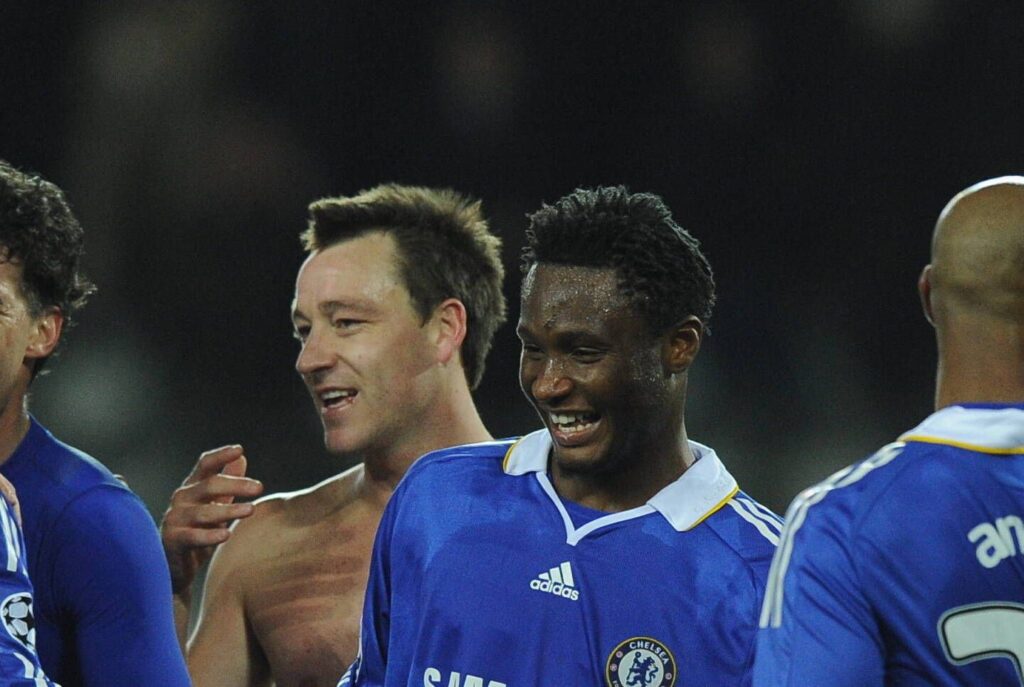
Terry’s view was not simply that of a neutral observer watching an African powerhouse miss out. The Chelsea connection adds a specific weight to his position on this subject. Mikel Obi, his former teammate at Stamford Bridge across several seasons during which the two shared a Premier League title and multiple FA Cups, is among the most vocal critics of the Nigeria Football Federation’s management of the failed World Cup qualification campaign. Mikel has spoken repeatedly and publicly about his frustration since Nigeria’s penalty shootout defeat to DR Congo in Rabat last November ended the Super Eagles’ hopes. Terry knows him well enough to understand where that frustration comes from. Nigerian football fans following all the World Cup reactions and Super Eagles AFCON build-up news can find the latest content and Bet9ja offers at Nigeria’s top Bet9ja promotion code page.
The Professional Dimension Terry Revealed
What made Terry’s contribution to the roundtable distinctly newsworthy was not the general sentiment about Nigeria’s absence but the specific insight he offered about Mikel’s frustration. While the broad public reading of Mikel’s criticism has focused on his feelings as a former player and a Nigerian football figure, Terry pointed to a second layer that has received less attention. Mikel’s growing profile as a television football analyst and pundit means Nigeria’s failure to qualify has had direct professional consequences for him. With the Super Eagles not at the World Cup, the opportunities for Mikel to cover his own country’s matches, discuss their campaign, and feature prominently across the tournament’s broadcast coverage were simply removed. Terry’s framing was direct Mikel was deeply disappointed that the Super Eagles were not there, and a significant part of that disappointment was connected to the fact that their absence limited what he could do professionally on the global broadcasting stage the tournament provides.
It is a dimension that is easy to overlook when assessing the reaction of former players to qualification failures. The broadcast and analysis industry around major tournaments creates significant work opportunities for those whose credibility as commentators is tied to their national identity and playing history. Mikel’s voice on Nigerian football carries authority precisely because of who he is and what he achieved in the green and white. A World Cup without Nigeria is not just a personal disappointment for him it represents a window of international visibility and professional opportunity that will not come again until the next tournament, assuming Nigeria qualify. All the latest Super Eagles news and build-up to the 2027 AFCON qualification campaign are available at FootballInNigeria.com.ng’s Bet9ja promotion code page.
How Nigeria’s World Cup Dream Ended
Terry’s tribute to Nigeria’s quality sits against the backdrop of exactly how the qualification campaign unravelled. The Super Eagles were drawn in Group C of the African qualifiers and dropped enough points against South Africa across the campaign to finish second in the group rather than first, forcing them into a playoff route. They defeated Gabon in the playoff’s opening stage, setting up a decisive two legged final against DR Congo. In the match that settled the matter, played in Rabat, Morocco, Nigeria and DR Congo were level at 1-1 after extra time, Frank Onyeka had equalised after Nigeria fell behind before a penalty shootout produced the result that sent DR Congo through. Calvin Bassey, Moses Simon, and Semi Ajayi all missed from the spot as Nigeria lost 4-3 on penalties, ending their 2026 campaign in the most painful way possible.
The fallout was significant. Reports of unpaid bonuses, coaching changes, and administrative confusion had disrupted preparations at crucial moments. The NFF subsequently attempted to challenge DR Congo’s qualification through FIFA but was unsuccessful. The tournament is now underway with ten African nations in it, DR Congo, South Africa, Morocco, Senegal, Ghana, Egypt, Algeria, Tunisia, Côte d’Ivoire, and Cape Verde and without the Super Eagles. Terry’s assessment that Nigeria would have made the competition stronger is a view shared across the football world. It offers no comfort to the players who missed two consecutive World Cups, but it confirms something that Nigerian football supporters have known all along. Following the World Cup and Super Eagles AFCON qualification news is easier with FootballInNigeria.com.ng covering every development through the summer.
📌 Did You Know?
- John Terry and John Obi Mikel were Chelsea teammates from 2006 to 2017, sharing four Premier League titles, four FA Cups, one League Cup, one Champions League, and one Europa League across their overlapping time at Stamford Bridge one of the most decorated partnerships in English football history.
- John Obi Mikel has become one of the more prominent Nigerian voices in football broadcasting since retiring from playing, featuring regularly on SuperSport as an analyst and pundit for African and international football. Nigeria’s World Cup absence directly limits his presence in tournament coverage given that his credibility as a pundit is closely linked to his national identity.
- Frank Onyeka, who scored Nigeria’s equaliser in the DR Congo playoff final in Rabat to make it 1-1 and force extra time, was one of the Super Eagles’ more consistent performers across the qualification campaign. His goal extended the tie but could not ultimately prevent the penalty shootout defeat that ended Nigeria’s hopes.
- The three Super Eagles players who missed penalties in the DR Congo shootout Calvin Bassey, Moses Simon, and Semi Ajayi are all established internationals with significant club careers. Bassey plays for Fulham, Simon was at Porto, and Ajayi at West Bromwich Albion at the time of the match, making it a penalty defeat that cannot be attributed to a lack of experience among the takers.
- The NFF’s attempt to challenge DR Congo’s qualification through FIFA after the November 2025 playoff was rejected, confirming that the result stood and Nigeria’s exclusion from the 2026 World Cup was final. This was one of the more unusual post qualification procedures in recent African football history.
- Cape Verde, one of the ten African nations at the 2026 World Cup, qualified for the tournament for the first time in their history. Their achievement stands in stark contrast to Nigeria’s absence, given that Cape Verde’s entire population is roughly equivalent to that of a mid sized Nigerian city.
- John Terry was part of the England squad for the 2006 FIFA World Cup in Germany, where England reached the quarter-finals before being eliminated by Portugal on penalties a result that bears an uncomfortable symmetry with Nigeria’s own penalty elimination by DR Congo two decades later.