As the 2026 FIFA World Cup kicks off without Nigeria, a prominent stakeholder has stepped forward to argue that NFF president Ibrahim Gusau is being made a scapegoat for a systemic failure that predates his leadership.
Want our football coverage to show up first?
Add FootballInNigeria as a preferred source and our stories get a "Preferred" badge in your Google Top Stories, AI Overviews, and AI Mode results.
The 2026 FIFA World Cup has arrived, and with it comes the familiar sting of watching African rivals represent the continent while Nigeria sits on the sidelines. For the second consecutive time, the Super Eagles will not be in a World Cup. The question gripping Nigerian football remains unanswered, who carries the blame?
Ahmed Shuiabu Gara-Gombe, a prominent football administrator and commentator, has thrown his weight behind NFF president Ibrahim Musa Gusau, insisting the federation boss should not be cast as the primary villain in Nigeria’s latest qualification disaster. Writing on the issue, Gara-Gombe argued that Gusau has been left to absorb public anger that rightly belongs elsewhere.
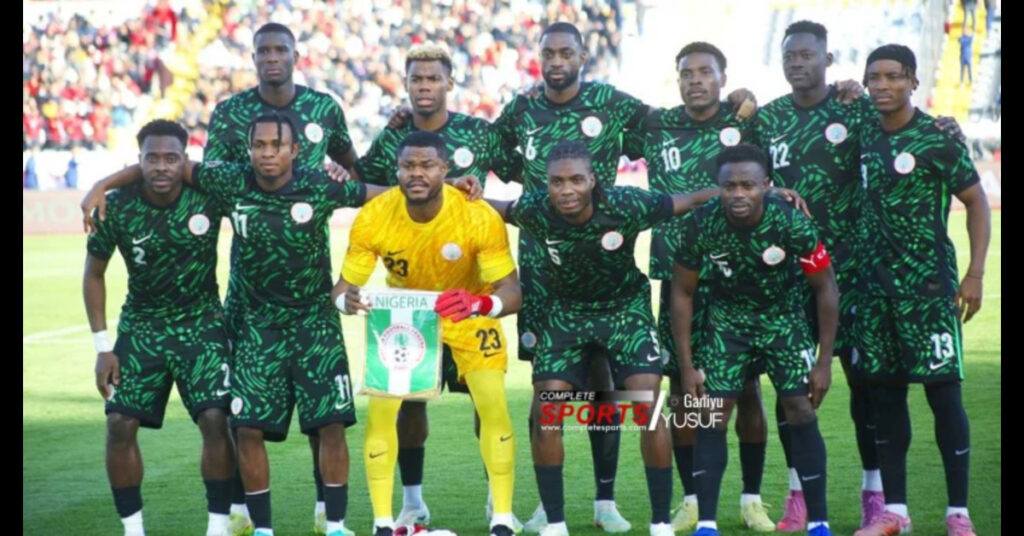
Nigeria’s exit was painful and very public. The Super Eagles lost 4-3 on penalties to DR Congo in the African playoff final in Rabat, Morocco, in November 2025, after the game ended 1-1 across regulation and extra time. That defeat sealed a second consecutive World Cup absence, leaving a squad containing the likes of Victor Osimhen, Ademola Lookman, Wilfred Ndidi, and Alex Iwobi without a global stage. The NFF subsequently issued an apology to President Bola Tinubu and Nigerian football stakeholders, acknowledging the depth of the disappointment. Super Eagles fans looking ahead to international fixtures can check out the today’s Bet9ja promo code ahead of upcoming Nigeria friendlies against Portugal and Poland.
A Defence Built on Context
Gara-Gombe’s central argument is that Gusau inherited a deeply broken system. According to the administrator, the foundations of Nigerian football were already cracked long before Gusau took the helm of the NFF. Faulty policy frameworks, backlog debts owed to players and coaches, and structural problems at youth level were all in place when Gusau arrived, making meaningful reform difficult within the compressed timelines of World Cup qualification.
He pointed specifically to the bonus and allowance crisis that plagued the Super Eagles camp during the qualifiers. Reports of players threatening to boycott crucial matches over unpaid entitlements were widely covered, yet Gara-Gombe argued these financial problems were inherited debts, not newly created ones. It is a point that carries some weight: FootballInNigeria.com.ng has previously reported that coaches including Jose Peseiro and Gernot Rohr were forced to approach FIFA to compel the NFF to release their outstanding wages, a practice that predates Gusau’s tenure.
Gara-Gombe also raised the issue of internal sabotage, suggesting that certain individuals within the NFF hierarchy were more focused on securing committee positions in CAF than on pushing Nigeria’s World Cup qualification. Without naming names, he characterised these figures as “enemies within” who undermined collective efforts while positioning themselves for personal gain.
The Broader Picture Many Are Ignoring
The criticism directed at Gusau has been fierce and wide-ranging. Former Super Eagles captain John Obi Mikel called for the entire NFF board to resign, describing the World Cup absence as a national disaster. Former NFF president Amaju Pinnick suggested Nigeria had no business failing to qualify given that the expanded 48-team format opened up ten African slots. Gara-Gombe’s defence runs directly against this tide of opinion.
What he asks critics to consider is whether the failures inside the NFF are Gusau’s alone to own, or whether a collective of administrators, technical staff, and players contributed to the outcome. He noted that Super Eagles also failed to qualify for Qatar 2022, a failure that cannot be attributed to the current leadership at all. The pattern of qualification failures, in his reading, is systemic rather than personal.
For Super Eagles supporters planning to back Nigeria in upcoming friendlies and qualifiers, the YOHAIG promo code offers a solid way to start on Bet9ja ahead of those fixtures.
What the Opposing View Says
The case against Gusau rests on a damaging set of facts. Under his watch, coach Eric Chelle was reportedly owed two months of salary at the time of the playoff against DR Congo. The NFF has acknowledged publicly that player bonuses were not fully settled. The FIFA mini-stadia projects in Warri and Kebbi became controversy points, and the management of Ola Aina’s injury, sustained on a sub-standard pitch during a qualifier, drew sharp criticism.
Those who reject Gara-Gombe’s position point out that Gusau’s defenders were also strangely quiet when Nigeria failed to protest the hosting of several qualifiers in South Africa under conditions that disadvantaged visiting teams. A crucial qualifier was moved to Bloemfontein, to a pitch not fit for international football. The NFF’s silence on that issue cost Nigeria more than anyone has cared to admit publicly.
The NFF did issue a public apology after the DR Congo defeat, acknowledging that the collective effort did not deliver the outcome Nigeria deserved. What the apology did not do was assign individual accountability within the federation structure. That ambiguity is precisely what Gara-Gombe is defending, and what his critics say is the problem. Super Eagles fans preparing for the next qualification cycle can stay on top of every Nigeria match through Bet9ja’s current promo code for enhanced pre-match offers.
Where Nigerian Football Goes From Here
The bigger question lingering behind this debate is about structure. Morocco reached the 2022 World Cup semi-finals and has since won the FIFA U-20 World Cup. Senegal qualified for the 2026 tournament with a squad built through a structured youth pipeline stretching from the Génération Foot academy to top European leagues. Nigeria, by contrast, has missed two consecutive World Cups with arguably the most talented pool of players the country has ever produced.
Gara-Gombe believes Gusau understands this structural gap and has been quietly trying to address it while absorbing public criticism. Whether that reading holds up will depend on what the NFF produces in the next qualification cycle. The World Cup is already underway without the Super Eagles. The debate over who failed Nigeria will continue long after the tournament ends.
For now, Gara-Gombe’s intervention serves as a reminder that Nigerian football’s problems are too deep and too old to be pinned cleanly on any one man. Whether that reading brings any comfort to fans watching a World Cup without their green and white is another matter entirely.
📌 Did You Know?
- Nigeria’s six World Cup appearances remain the most by any African nation, yet the Super Eagles have now missed consecutive editions for the first time in the country’s football history.
- The 2026 FIFA World Cup is the first to feature 48 teams, meaning Africa has ten qualifying slots. Nigeria failed to take advantage despite that expanded opportunity.
- NFF’s financial difficulties are not new: former coach Gernot Rohr publicly stated he was owed salaries during his tenure, a situation that forced him to seek FIFA’s intervention before receiving payment.
- DR Congo, the team that eliminated Nigeria in the African playoff final in Rabat, went on to qualify for the 2026 World Cup, their third appearance in the tournament’s history.
- Ahmed Shuiabu Gara-Gombe, the author of the Gusau defence, is a former NFF board member and long standing figure in Nigerian football administration with over two decades of involvement at national level.
- Morocco’s Mohammed VI Football Academy, which underpins the Atlas Lions’ recent youth success, was established with direct state funding and a deliberate national strategy targeting continental dominance by 2030.
- Nigeria’s last World Cup appearance was Russia 2018, where the Super Eagles reached the group stage before being eliminated, despite showing moments of quality under Gernot Rohr.