Dr Segun Odegbami was in the room when professional football was born in Nigeria. As a member of the original implementation committee that helped craft the 1990 decree, he carries a personal stake in what the NPFL has become, which is precisely why his assessment of where it stands 36 years later carries a weight that no outside critic can match.
On May 12, 1990, President Ibrahim Badamasi Babangida signed the decree that formally launched professional football in Nigeria. The Nigeria Professional Football League came into being with a vision as ambitious as any sporting reform project on the continent: that within seven to ten years, the domestic league would be unrecognisable from what had preceded it, and Nigerian football would have built the infrastructure to sustain itself as a world-class product for generations. Thirty-six years later, with the 2025-26 NPFL season reaching its final day on Saturday, Odegbami is still waiting for that plane to leave the tarmac.
“The journey from 1990 to date needs to be properly documented and studied as a model to scholars of football on how NOT to run a Nigeria professional football league,” he writes in his column published on Saturday. “That’s where we are in 2026.” The bluntness of that verdict from someone who helped create the system it describes is not anger for its own sake. It is the reckoning of a man who has watched a careful plan become an accumulation of missed opportunities, political interference, and administrative weakness across four decades.
Want our football coverage to show up first?
Add FootballInNigeria as a preferred source and our stories get a "Preferred" badge in your Google Top Stories, AI Overviews, and AI Mode results.
Nigerian football supporters following the NPFL’s dramatic final day on Saturday, with the title race between Rangers and Rivers United and multiple survival battles all to be resolved simultaneously, can use the Bet9ja NPFL final day code to engage with all the simultaneous 4pm kickoffs.
What The 1990 Vision Actually Promised
The original 1990 NPFL vision — what was supposed to happen within 7-10 years:
Most clubs privately owned, with their own stadia
Administrators as qualified technocrats with solid business backgrounds
Domestic league competing with European football for live TV audiences
Standard of play the best in Africa
Zero corruption and hooliganism
Nigerian referees among the continent’s finest
Players earning wages that ended migration to even Benin Republic
League producing players good enough for national teams
Each club run as a business, many trading on the stock exchange
Stadia filled with fans across the country
Every single item on that list remains unfulfilled in 2026. That is Odegbami’s indictment, and it is not one he delivers without evidence. He describes a league that has become a financial nightmare for all those trying to make it work, one where no single club in 36 years has declared financial success in its operations. He quotes a private conversation with the owner of what he considers the best-run professional club in Nigeria today, believed to be Remo Stars of Ikenne, in which the owner told him that winning the NPFL title is no longer an incentive to participate in the league, because the prize money cannot fund a single continental club match.
The Early Promise That Made The Collapse So Painful
What makes Odegbami’s account particularly valuable is that he does not begin from failure. He chronicles the early years of professional football in Nigeria as a time of genuine promise, when the indicators were everywhere that the vision could be achieved. Between 1990 and 1994, Nigerian football rode the momentum of that new professional structure and produced one of the most celebrated stretches in the country’s footballing history: the AFCON runners-up finish in 1990, the U-17 World Cup triumph in Japan in 1993, the AFCON title in Tunisia in 1994, and the World Cup appearance in the United States later that year where Nigeria lifted the country to fifth place on FIFA’s global ranking.
Players of that era, Etim Esin, Mutiu Adepoju, Victor Ikpeba, Daniel Amokachi, were world-class commodities being produced by a domestic system that was on an upward trajectory. Multinationals scrambled for sponsorship of the envisioned league. Foreign clubs from Europe and South America toured Nigerian stadia regularly. That was the context in which the professional league was born, and it is the context that makes what followed so difficult to understand from the outside and so painful to describe from the inside.
Readers who want to understand the NPFL’s commercial context alongside the excitement of Saturday’s final day can check the Bet9ja YOHAIG full season offer as the current campaign closes and the next one begins to take shape.
The Administrative Collapse That Doomed The Project
Odegbami’s diagnosis of what went wrong does not rest on any single decision or moment. It traces a pattern across decades: high turnover of personnel for political reasons, successors who were weak on the original vision and lacked the institutional memory to sustain it, and a system that was never fully insulated from the political interference that has plagued Nigerian sports administration broadly. By the end of the 1990s, he writes, the league’s developmental plane was still revving idly on the tarmac.
The structural critique goes deeper. Most teams in the NPFL are still government clubs without a business structure or business thinking in their operations. Players’ wages are among the lowest in professional football anywhere on the planet. The stadia, except in one or two cases, are rarely filled. No foreign clubs can play on any turf in the country. There is not a single title sponsor for the league, let alone a scramble for sponsorship. The security risks of long-distance travel by road to fulfil fixtures in different parts of the country create dangers for players and officials that most comparable leagues do not impose on their participants.
The detail that landed hardest in Odegbami’s column is the private admission from the Remo Stars owner. Remo Stars won the NPFL title in 2022-23 and are widely regarded as the most professionally managed club in the current league structure. If even their owner privately regards the league as dangerous for well-run clubs rather than a platform for growth, the message about the current state of Nigerian club football is as stark as any official report could deliver.
Eight Clubs From 1990 Still Standing
There is one detail in Odegbami’s historical account that cuts through the bleakness with an unexpected note: eight of the original 16 clubs that started the professional league in 1990 are still in the current setup. In a system that Odegbami describes as being on life-support, the persistence of those clubs across 36 years of financial difficulty, administrative failure, and structural neglect is either a testament to the resilience of Nigerian football culture or a reflection of the lack of alternatives that might have replaced them. Either interpretation contains something worth considering.
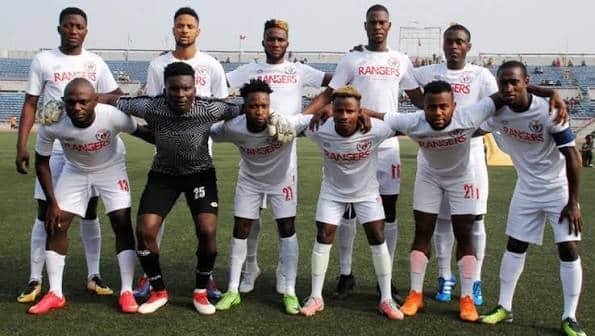
The original 16 included clubs like Rangers International, Bendel Insurance, and Shooting Stars, names that carry the weight of the amateur era’s golden period and that Odegbami references as clubs that were competing at the highest levels of African club football before professionalisation was even attempted. Their continued presence in the league they helped found is the thread that connects the ambition of 1990 to the drama of Saturday’s final day, a continuity that runs beneath the surface of every structural criticism Odegbami makes.
What The NPFL Needs And What Saturday Suggests Is Possible
Odegbami stops his lament at the point of prescription, noting only that the league needs more than passion and hope. But the 2025-26 season itself offers a partial counter-argument to the most totalising version of his critique. A title race between Rangers and Rivers United that goes to the final day, five clubs separated by points in a relegation battle decided by simultaneous Saturday kickoffs, and a first-day drama that has involved every quadrant of the country, suggests that the NPFL has the raw material for a compelling product even if the commercial and structural framework to monetise that product remains absent.
The gap between the drama on the pitch and the financial reality off it is exactly the gap Odegbami has been writing about for decades. Fixing it will not happen through a single decision or a single season. As reported by FootballInNigeria.com.ng, Odegbami’s column arrives on the same morning as the most significant NPFL final day in recent memory, a timing that gives his historical reckoning an immediate and urgent context. Whatever happens between Rangers and Ikorodu City in Lagos, and between Rivers United and Katsina United in Port Harcourt on Saturday afternoon, the structural critique he has been making since 1990 will remain relevant on Sunday morning. Fans watching the final day unfold can use the Bet9ja correct score page for Saturday’s simultaneous NPFL kickoffs across all venues.
📌 Did You Know?
- Dr Segun Odegbami is one of Nigeria’s most celebrated former footballers, having been part of the Super Eagles squad that reached the 1980 Africa Cup of Nations final and won the bronze medal. He played as a striker during a domestic career centred at IICC Shooting Stars of Ibadan and was regarded as one of the finest Nigerian forwards of his generation before transitioning into sports journalism and administration.
- The Nigerian Professional Football League was formally established when President Ibrahim Badamasi Babangida signed the enabling decree on May 12, 1990. The decree was the culmination of a process that began as far back as 1986 under then-Sports Minister Emeka Omeruah, making the path from concept to law a four-year administrative journey that itself foreshadowed the difficulties ahead.
- Nathaniel Idowu, who chaired the Professional Football Implementation Committee in 1990, personally funded a trip to London by the committee’s technical team to complete the final documentation required to start the league, at a time when government funding for the process had become unreliable. The trip produced the guidelines that governed the league’s first season.
- Of the original 16 clubs that launched the NPFL in 1990, eight remain in the current top-flight structure 36 years later. Their persistence across the full history of professional football in Nigeria represents a form of institutional continuity that the league’s administrative disruptions have not been able to completely erase.
- Nigerian football’s 1994 World Cup campaign in the United States, which produced the country’s highest-ever FIFA ranking of fifth in the world, took place just four years after the professional league’s launch. It remains the most cited evidence that the early years of professionalism did correspond with a genuine rise in the quality of Nigerian football at the national level, even if the domestic league itself did not sustain that trajectory.
- The NPFL has operated without a title sponsor for the league as a whole for multiple consecutive seasons, a situation that would be considered an existential crisis for any comparable professional football league in Europe, Asia, or South America. The absence of commercial backing from a major corporation is one of the most visible symptoms of the structural problems Odegbami diagnoses in his column.
- Leventis United, one of the clubs Odegbami references as part of the amateur era’s golden period, were formed as the football arm of the Leventis company’s Nigerian operations and represented one of the earliest examples of corporate-backed Nigerian club football. Their historical existence underlines how the corporate enthusiasm that Odegbami remembers from the early professional era has been almost entirely absent from the subsequent decades of league development.