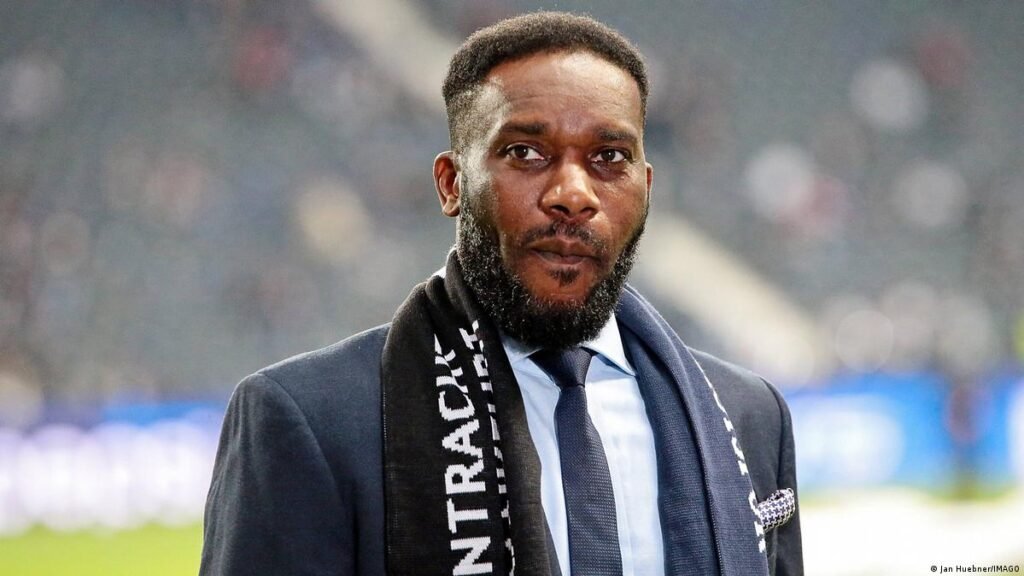

Abdu Maikaba has wasted no time putting his technical structure in place after his appointment as Flying Eagles head coach, naming three backroom staff members as the Nigeria U-20 side prepares to resume camp in Abuja on Sunday ahead of July’s WAFU B U-20 Boys Championship.
The machinery of Nigerian youth football is moving again. Abdu Maikaba, who was appointed head coach of the Flying Eagles following the end of the 2025-26 NPFL season, has confirmed the three men who will form his technical team as the squad begins preparations for the most important qualifying window in the current youth football cycle. Camp resumes at the NFF’s facilities in Abuja on Sunday, May 17, with the July WAFU B U-20 Boys Championship as the first major objective on the calendar.
Ortega Deniran has been named first assistant to Maikaba, with Abdullahi Biffo taking the second assistant role and Usman Mohammed confirmed as the goalkeepers’ trainer. The three appointments complete a backroom team that Maikaba selected personally, and the NFF confirmed all three names simultaneously with the announcement of the squad resumption date.
Want our football coverage to show up first?
Add FootballInNigeria as a preferred source and our stories get a "Preferred" badge in your Google Top Stories, AI Overviews, and AI Mode results.
In parallel, newly appointed Golden Eaglets head coach Eboboritse Uwejamomere has confirmed his own backroom staff: Olumide Joseph Ajibolade as first assistant, Mohammed Kalli Kachala as second assistant, and Abdullahi Isa as goalkeepers’ trainer. The Eaglets face their own WAFU B qualifying campaign in September, which will determine Nigeria’s participation in the 2026 Africa U-17 Cup of Nations.
Nigerian youth football fans following the Flying Eagles’ and Golden Eaglets’ qualifying campaigns can get ahead with the Bet9ja latest promo code as both squads begin their journeys toward the 2027 and 2026 continental championships.
The Full Backroom Staff For Both Squads
| Role | Name |
|---|---|
| Flying Eagles (U-20) — Head Coach: Abdu Maikaba | |
| First Assistant Coach | Ortega Deniran |
| Second Assistant Coach | Abdullahi Biffo |
| Goalkeepers’ Trainer | Usman Mohammed |
| Golden Eaglets (U-17) — Head Coach: Eboboritse Uwejamomere | |
| First Assistant Coach | Olumide Joseph Ajibolade |
| Second Assistant Coach | Mohammed Kalli Kachala |
| Goalkeepers’ Trainer | Abdullahi Isa |
Who Is Abdu Maikaba?
Abdu Maikaba brings to the Flying Eagles role a coaching career built almost entirely within the Nigerian football ecosystem. He is best known for his work at Kano Pillars, one of Nigeria’s most historically significant clubs, where he guided the Sai Masu Gida to the NPFL title in the 2014-15 season and established himself as one of the more tactically disciplined coaches in the domestic game. His ability to organise a compact defensive structure while retaining attacking ambition was a hallmark of his Pillars teams, and those qualities translate naturally to the demands of tournament football at youth level, where single-elimination matches punish tactical naivety immediately.
His appointment signals a preference for experience within the domestic coaching landscape rather than recruitment from outside. Maikaba has spent years observing NPFL players at close range, which gives him a foundation for squad selection that a newly arrived coach without that context would lack. The WAFU B tournament in July will be his first formal test in the role, and the pressure is immediate: Nigeria must qualify from the regional competition to reach the 2027 Africa U-20 Cup of Nations, a tournament the Flying Eagles have won a record seven times.
Why The WAFU B Championship Matters So Much
The WAFU B U-20 Boys Championship in July is not simply a regional competition. It is the sole qualification route for West African nations to reach the 2027 Africa U-20 Cup of Nations, meaning Maikaba’s side must perform in a short-format tournament against the full strength of the West African sub-region to earn their place at the continental stage. Countries like Ghana, Senegal, Ivory Coast and Burkina Faso all compete through the same WAFU B pathway, and the regional competition has historically been one of the most fiercely contested in African youth football.
Nigeria’s record at the Africa U-20 Cup of Nations is unmatched: seven titles, more than any other country in the tournament’s history. That legacy creates both motivation and expectation, and it is a burden that every Flying Eagles coach must carry into each qualifying cycle. Maikaba and his staff have roughly eight weeks between Sunday’s camp resumption and the July tournament to identify, select, and prepare a squad capable of representing the seven-time champions at the level the programme demands.
The Flying Eagles’ recent record at WAFU B has been mixed, with qualification to the continental stage not always straightforward despite Nigeria’s historic dominance. The appointment of an experienced domestic coach like Maikaba is partly a response to that inconsistency, and the expectation from the NFF is that a coach who understands the NPFL talent pool deeply will be better placed to identify the right players for the demands of youth international football. Readers following the Flying Eagles’ preparations alongside the Falconets’ World Cup campaign can also check the Bet9ja YOHAIG registration deal for the best current welcome offer.
The Golden Eaglets’ Parallel Mission
Eboboritse Uwejamomere faces a similarly urgent timeline with the Golden Eaglets. His WAFU B U-17 Boys Championship takes place in September, serving as the qualification route for the 2026 Africa U-17 Cup of Nations. The Eaglets are five-time winners of the global U-17 World Cup and three-time Africa U-17 champions, making them one of the most decorated age-grade football programs anywhere on the planet.
Uwejamomere was appointed to rebuild a Eaglets programme that has experienced varying fortunes in recent cycles, and his backroom staff selections reflect a similar domestic coaching preference to Maikaba’s choices for the Flying Eagles. With Ajibolade and Kachala as his assistants and Abdullahi Isa handling the goalkeepers, Uwejamomere has a team around him that carries familiarity with Nigerian youth football’s talent landscape from grassroots through the NPFL academies.
The Bigger Picture For Nigerian Youth Football
The simultaneous appointments across both squads represent one of the more coordinated moments of youth football planning the NFF has executed in recent years. Both the U-20 and U-17 programmes are now staffed and camp dates are confirmed, giving the national football administration a cleaner runway toward two separate continental qualifiers in the same calendar year. The proximity of the World Cup this summer, which will dominate the senior football narrative, makes the NFF’s ability to keep the youth pipeline moving without distraction all the more significant.
As reported by FootballInNigeria.com.ng, the Flying Eagles’ camp resumption on Sunday, May 17 is the formal beginning of a youth football cycle that will carry Nigerian football’s developmental ambitions through 2026 and into 2027. How Maikaba shapes the squad in the coming weeks, and which NPFL talents he identifies as ready for the jump to international competition, will be one of the more closely watched stories in Nigerian football this summer. Fans tracking both the Flying Eagles and Golden Eaglets through qualifying can use the Bet9ja existing customers code page for the latest ongoing offers alongside both campaigns.
📌 Did You Know?
- Nigeria’s Flying Eagles have won the Africa U-20 Cup of Nations a record seven times, more than any other country in the history of the tournament. Their titles came in 1983, 1985, 1987, 1989, 1991, 2005 and 2015, a span of three decades that underlines how consistently Nigeria has produced exceptional U-20 talent.
- Abdu Maikaba led Kano Pillars to the NPFL title in the 2014-15 season, their fourth and most recent league championship. The title was the product of a tactically disciplined Pillars side that was particularly difficult to break down, a quality that is directly relevant to the demands of tournament football at international youth level.
- Nigeria’s Golden Eaglets have won the FIFA U-17 World Cup five times, in 1985, 1993, 2007, 2013 and 2015, making them the most successful nation in the history of the competition. Their five titles are two more than the next-highest country, Brazil, and represent an extraordinary run of youth development success over four decades.
- The WAFU B sub-region covers West African nations including Nigeria, Ghana, Senegal, Ivory Coast, Guinea, Burkina Faso, Togo, Benin, Sierra Leone and Niger, among others. Competing through the WAFU B pathway means Nigeria must beat some of the strongest youth football nations on the continent before reaching the continental stage.
- Ortega Deniran, named as Maikaba’s first assistant for the Flying Eagles, is a familiar face in Nigerian football coaching circles with experience across several clubs in the domestic game. His appointment as first assistant gives Maikaba a lieutenant who understands the NPFL environment from which the Flying Eagles squad will primarily be drawn.
- Eboboritse Uwejamomere, the new Golden Eaglets head coach, brings youth development experience to the role. His first major test as national coach will be September’s WAFU B U-17 championship, which serves as the direct qualification route for the 2026 Africa U-17 Cup of Nations.
- The Flying Eagles last won the Africa U-20 Cup of Nations in 2015 in Senegal, defeating Senegal 3-0 in the final. In the years since, Nigeria have qualified for the continental tournament but have not reached a final, making the current cycle an opportunity to restore the programme to the level of dominance its history demands.