Liverpool led 2-0. Brighton were being outplayed. Then the game turned, and at the centre of everything that followed was a Nigerian goalkeeper who refused to let the comeback unravel.
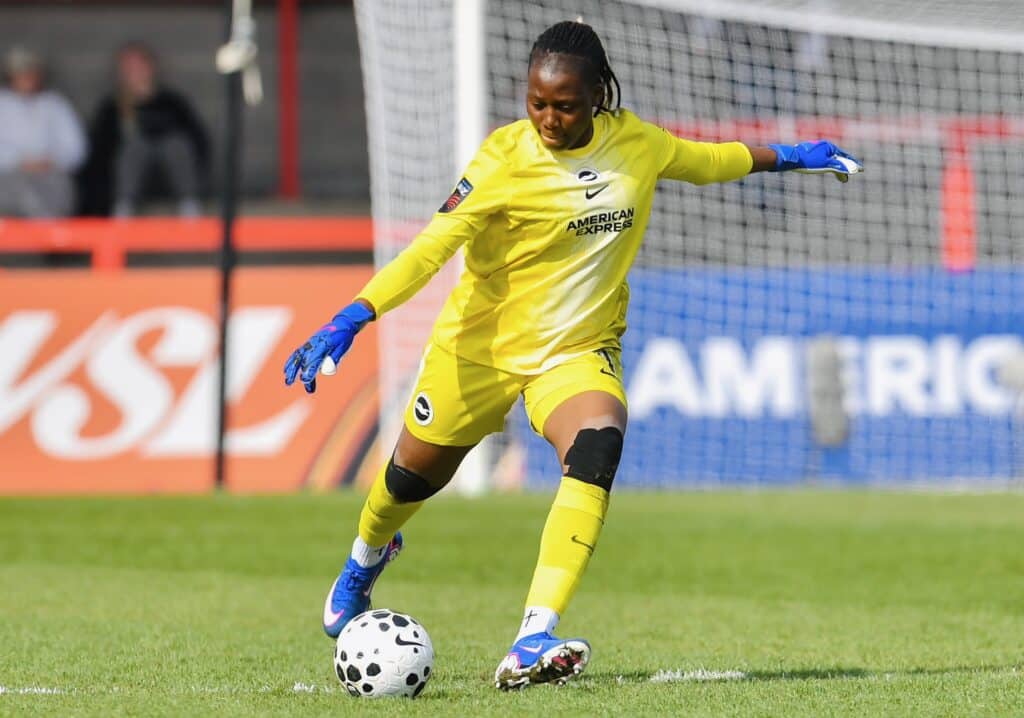
Chiamaka Nnadozie produced the defining goalkeeping performance of the Women’s FA Cup semi-final as Brighton came from two goals down to beat Liverpool 3-2 at St Helens Stadium on Sunday, earning the club a place in their first-ever Women’s FA Cup final. The Super Falcons goalkeeper made two crucial late saves that kept Brighton level before substitute Nadine Noordam struck in the fifth minute of stoppage time to complete one of the great comebacks in the competition’s history.
Brighton will now face either Chelsea Women or Manchester City Women at Wembley on May 31. It is the biggest occasion in the club’s women’s football history, and it would not have been possible without the woman between their posts.
Want our football coverage to show up first?
Add FootballInNigeria as a preferred source and our stories get a "Preferred" badge in your Google Top Stories, AI Overviews, and AI Mode results.
How Liverpool Took Control
The first half belonged to Liverpool. Denise O’Sullivan glanced a header beyond Nnadozie in the 11th minute after a Ceri Holland cross had picked her out at the back post. It was a well-worked goal and Liverpool looked sharp, organised, and full of belief. The second arrived just 11 minutes later when Beata Olsson reacted quickest inside the Brighton area, smashing a powerful finish high into the net to make it 2-0.
Brighton’s response came immediately. Within 105 seconds of Olsson’s strike, Colombian defender Manuela Vanegas bundled the ball home from close range to make it 2-1. The goal transformed the atmosphere inside St Helens Stadium and changed everything about how the next 70 minutes played out. Brighton fans following the FA Cup final preparations can check the Bet9ja YOHAIG promo code ahead of the Wembley showdown on May 31.
The Equaliser and the Pressure That Followed
Fran Kirby wasted a golden chance to draw level early in the second half, a miss that could have been costly. The equaliser arrived in the 54th minute when Japanese winger Kiko Seike delivered a teasing cross into the Liverpool area and American forward Madison Haley rose to head past Jennifer Falk for her fourth goal of this FA Cup campaign. Brighton were level and the game was completely open.
Liverpool pushed hard for the winner in the final stages. Substitute Aurelie Csillag broke through on goal with less than 10 minutes remaining and produced a low, driven effort that was heading for the corner. Nnadozie reacted brilliantly, pushing the shot away. Minutes later, a powerful strike from Cornelia Kapocs was heading for the net before Nnadozie stretched to tip it over the crossbar. Both saves were among the best of the FA Cup semifinal weekend in either the men’s or women’s competition. Those following Nnadozie’s historic run to Wembley can track the latest at bet9japromotioncode.com.ng.
Noordam’s Stoppage-Time Winner
The decisive moment arrived in the fifth minute of added time. Brighton won a free kick near the Liverpool penalty area. The delivery caused chaos in the box, and when the ball fell to Nadine Noordam, who had come off the bench only six minutes earlier, the Dutch midfielder took one touch to compose herself before firing a fierce finish into the roof of the net.
Brighton’s substitutes and coaching staff rushed onto the pitch. Liverpool players dropped to the turf. The scoreboard read 3-2. It is the biggest result in Brighton Women’s history, and it was built on three things: Vanegas’ composure to pull one back immediately after going 2-0 down, Haley’s clinical heading, and Nnadozie’s refusal to be beaten in the moments when Liverpool tried to reclaim the lead. Those who want to back Brighton in the Women’s FA Cup final can get started with this Bet9ja bonus code page ahead of Wembley on May 31.
What This Season Has Become for Nnadozie
Sunday’s performance adds another chapter to what is already the most decorated debut season by any African goalkeeper in English women’s football history. Six WSL clean sheets. Two WSL Save of the Month awards. A Save of the Season nomination. A Golden Glove race that went to the final weekend. And now a Women’s FA Cup final.
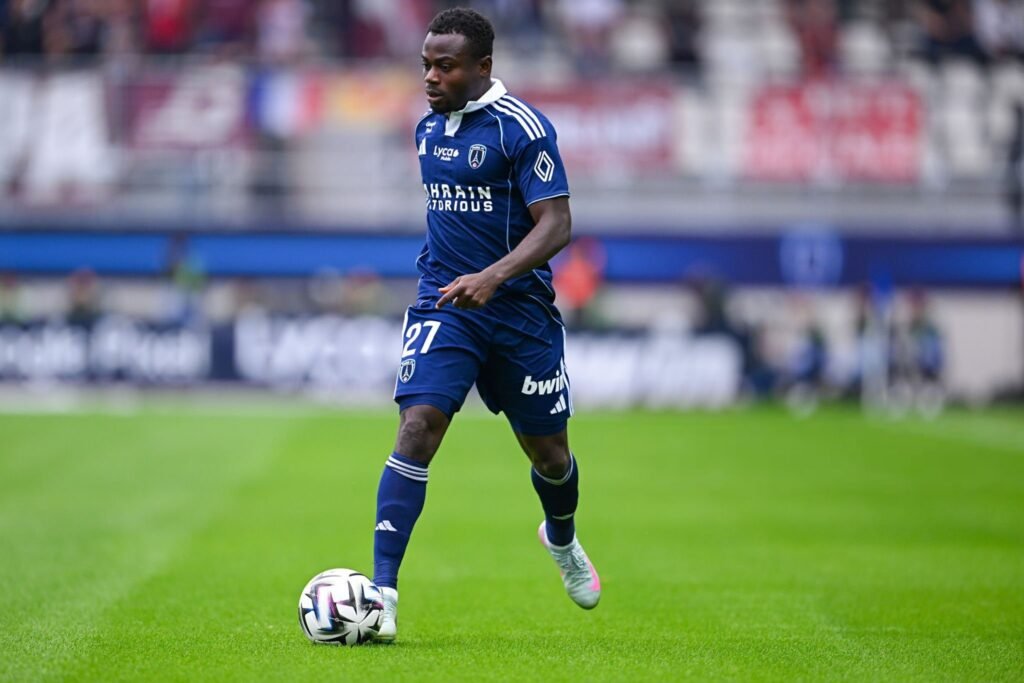
She arrived at Brighton from Paris FC last summer as a goalkeeper many English fans did not know. She leaves this season with a Wembley final ahead of her, the respect of every WSL coach and pundit, and a performance against Liverpool that will be replayed for years. For the Super Falcons and Nigeria, it is the kind of season that changes a player’s international standing permanently. Nnadozie was already one of the best goalkeepers in Africa. This season at Brighton has made that argument to the world.
Liverpool 2-3 Brighton (Women’s FA Cup Semi-Final)
- Denise O’Sullivan (Liverpool): 11′
- Beata Olsson (Liverpool): 22′
- Manuela Vanegas (Brighton): 24′
- Madison Haley (Brighton): 54′
- Nadine Noordam (Brighton, sub): 90+5′
- Brighton advance to their first-ever Women’s FA Cup final at Wembley, May 31
Did You Know?
- Brighton’s victory over Liverpool is the first time the club’s women’s team has reached the Women’s FA Cup final since the modern Women’s Super League era began in 2011. Brighton women’s football has grown significantly in resources and ambition over the past five years, with the club investing heavily in their academy and senior squad as part of a broader effort to compete with the traditional powerhouses of the women’s game in England.
- Madison Haley, who scored Brighton’s equaliser, has now scored four goals in the 2025/26 Women’s FA Cup campaign. The American forward joined Brighton from Portland Thorns in the NWSL ahead of this season and has been one of the most impactful attacking signings in the WSL in 2025/26. Her instinctive movement in the penalty area and her ability to score from header situations make her one of the more dangerous forwards Brighton will bring to Wembley.
- Nadine Noordam, whose stoppage-time winner sent Brighton to Wembley, is a Dutch midfielder who joined Brighton from Ajax Vrouwen in 2024. She had only been on the pitch for six minutes when the winning goal fell to her, making her one of the more impactful substitutes in Women’s FA Cup semi-final history. Her composed finish under maximum pressure, at the death of a tense and dramatic match, marks her out as a player with the temperament for the biggest occasions.
- Nnadozie’s save from Aurelie Csillag was her most significant of the entire WSL season in terms of its immediate consequence. A goal at that point would have put Liverpool 3-2 ahead with under 10 minutes to play, almost certainly ending Brighton’s comeback. Her reaction speed, getting down quickly to a low, driven effort at short range, is the kind of save that only the elite goalkeepers in the world can make consistently under pressure.
- Liverpool Women’s goalkeeper Jennifer Falk, who conceded three goals on Sunday, won the WSL Golden Glove in the previous two seasons and is widely considered one of the best goalkeepers in the division. The contrast between her day and Nnadozie’s, the two goalkeepers at opposite ends of a 3-2 scoreline, is one of the more compelling individual sub-plots of a match that had several layers of Nigerian interest.
- Dario Vidosic, the Brighton head coach who described Sunday’s result as the biggest of his reign, was appointed Brighton Women’s head coach in 2024 after previous management experience in Australia’s W-League and Asia. His tactical approach, built around compact defending and rapid transitions, has provided the structural foundation that allows individuals like Nnadozie to express their quality at the highest level of the English women’s game.
- The Women’s FA Cup final on May 31 at Wembley will take place the day after the UEFA Champions League final at the Puskas Arena in Budapest on May 30. The two finals in consecutive days create one of the most densely Nigerian football weekends in recent memory, with Nnadozie playing for Brighton at Wembley while the Arsenal vs PSG Champions League final takes place without any Nigerian players on the pitch but with Nigerian fans following both events across a 48-hour period of high-stakes European football.