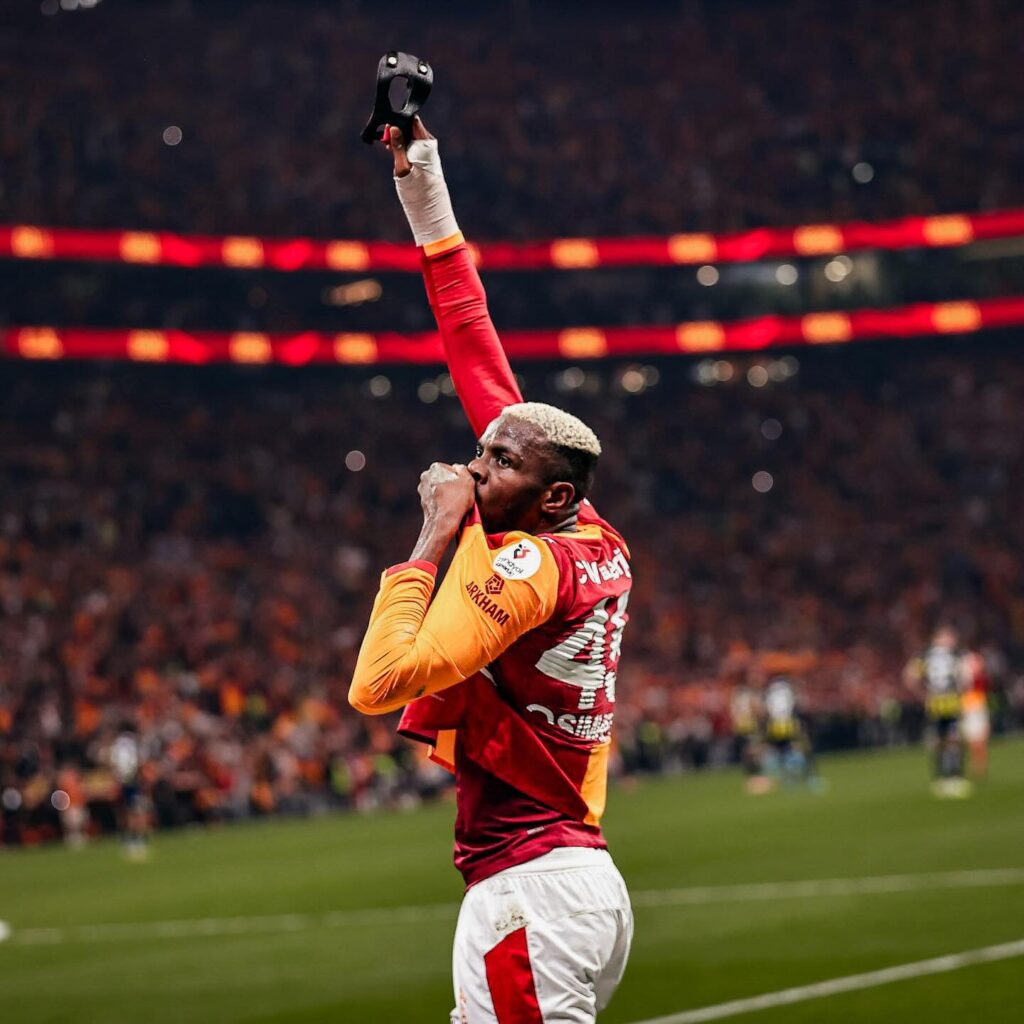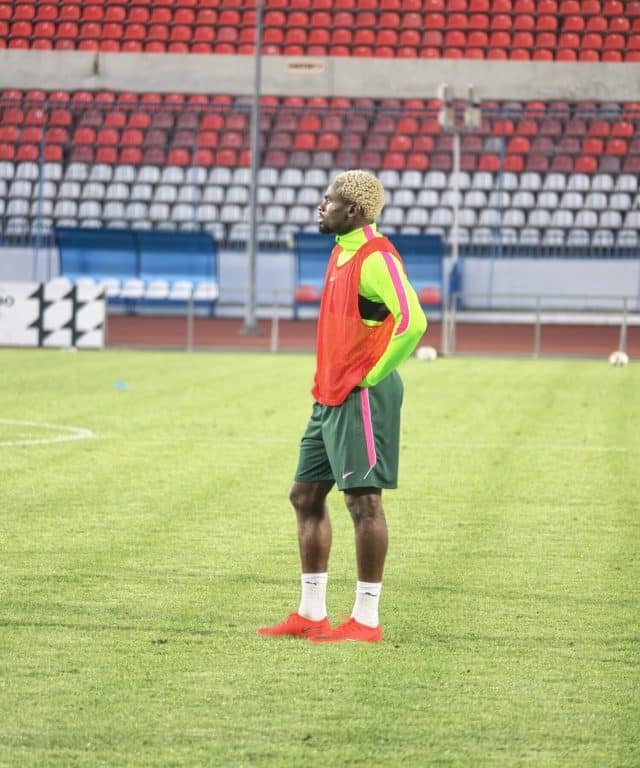

Former Manchester United first-team coach Benni McCarthy has confirmed that Victor Osimhen was at the top of the club’s striker wishlist in 2023, before AFCON obligations got him scratched off entirely.
United instead signed Rasmus Hojlund from Atalanta for £72 million in August 2023. The Danish striker went on to score 26 goals in 95 appearances before joining Napoli on loan last September, in a transfer saga that brought the Osimhen story full circle. Osimhen, the man United chose not to pursue, left Napoli for Galatasaray on loan in September 2024, then sealed a permanent move to the Turkish club last July.
Want our football coverage to show up first?
Add FootballInNigeria as a preferred source and our stories get a "Preferred" badge in your Google Top Stories, AI Overviews, and AI Mode results.
What McCarthy Really Thought of Osimhen
McCarthy wasn’t just indifferent to Osimhen. He was a genuine advocate. The South African legend, who is now head coach of Kenya, told the BBC that he believed the Super Eagles striker had the mentality to handle the unique pressures that come with wearing a Manchester United shirt.
That’s a pointed observation. McCarthy isn’t just talking about football here. He’s talking about character. Osimhen’s backstory is well documented: growing up in difficult circumstances in Lagos, losing his mother at a young age, and fighting his way up through Nigerian grassroots football before landing in Europe. McCarthy clearly felt that background would have made Osimhen uniquely equipped for life at a club as scrutinised as United.
McCarthy also admitted the decision made him personally sad: “My whole career, I fought to represent my country because I’m African.” He knows exactly what it means for a continental tournament to define a player’s transfer value in Europe. He lived it as a player himself.
The Bigger Problem: AFCON and African Players in Europe
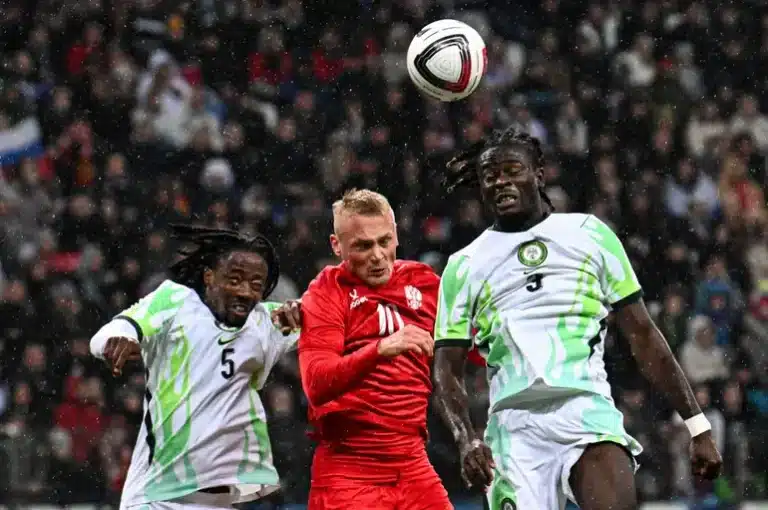
What McCarthy described isn’t unique to Osimhen. It’s a structural problem that has affected Nigerian and African players for decades. European clubs, particularly in the top five leagues, have long factored AFCON availability into their transfer calculations. A striker missing four to six weeks in January and February, often during the crunch phase of domestic and European campaigns, is a real operational concern for managers under pressure.
The difference with Osimhen was the price tag. At the level United were discussing, roughly £100 million, the risk calculation became more acute. The irony is that Hojlund, the replacement, delivered 26 goals in 95 appearances over two seasons before United moved him on. Osimhen scored 26 league goals in a single Serie A campaign in 2022/23.
There is good news on the structural side. The Confederation of African Football has announced that AFCON will switch to a quadrennial (every four years) format from 2028, in line with the FIFA World Cup cycle. CAF president Patrice Motsepe says the change was made in consultation with FIFA to better synchronise the international calendar. If that shift had happened earlier, this entire conversation might never have needed to take place.
McCarthy, though, has mixed feelings about losing the biennial format. He told the BBC he believes AFCON should have stayed every two years, but that the tournament’s timing needed to change, not its frequency.
What This Means for Nigeria
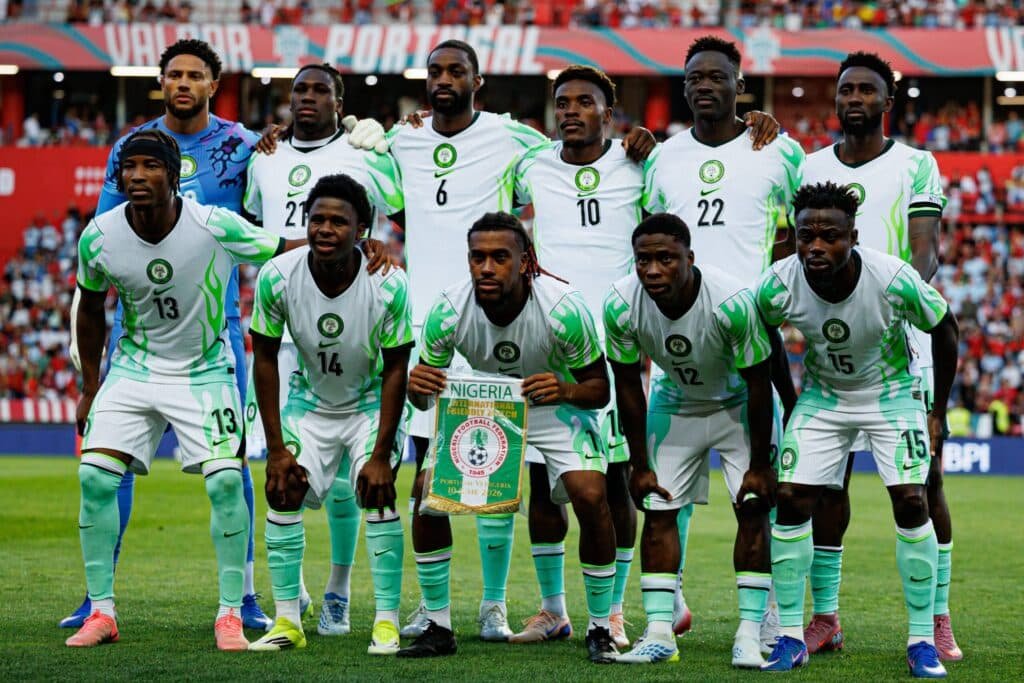
Osimhen’s story is the most high-profile example of AFCON’s impact on the transfer market, but it won’t be the last. How many other Nigerian players have been quietly passed over in boardroom discussions because a club didn’t want to lose them for five weeks in January? How many deals have been structured around AFCON availability rather than pure ability?
The 27-year-old Osimhen is now thriving at Galatasaray, having helped them eliminate Juventus in the UEFA Champions League play-offs this season. He’s doing fine. But the Manchester United chapter remains one of African football’s great transfer near-misses.
The 2028 AFCON format change won’t immediately fix the broader perception problem. European clubs have spent years building their planning assumptions around January AFCON absences. Changing that thinking takes time. But McCarthy’s candid comments are a valuable contribution to the debate, coming as they do from someone who sat in those transfer meetings and watched a generational striker get crossed off a list for reasons that had nothing to do with his ability.
📝 Editorial View
McCarthy deserves credit for being honest about this. Most people in football don’t admit that these conversations happen. The reality is that AFCON has functioned as an unofficial tax on African talent in the European transfer market for years. Clubs don’t say it publicly. They find other reasons to pass on a player. McCarthy has said it plainly.
What should also sit uncomfortably is this: United spent £72 million on a striker who delivered 26 goals in two full seasons. Osimhen scored 26 goals in one. The logic that protected United from AFCON absences enabled them to acquire a less productive striker at a lower price. Whether that was the right call is for United fans to debate. For Nigerian football supporters, the numbers speak for themselves.
📌 Did You Know?
- Victor Osimhen scored 26 Serie A goals in the 2022/23 season, firing Napoli to their first Italian league title in 33 years and earning the African Footballer of the Year award for 2023.
- Manchester United signed Rasmus Hojlund from Atalanta for £72 million in August 2023 after deciding against pursuing Osimhen. Hojlund scored 26 goals across 95 appearances before joining Napoli on loan in September 2025.
- Benni McCarthy served as first-team coach at Manchester United for two seasons (2022-2024) under Erik ten Hag, working with forwards including Cristiano Ronaldo. He is now the head coach of the Kenyan national team, the host nation for AFCON 2027.
- Osimhen joined Galatasaray on loan in September 2024, then completed a permanent transfer to the Turkish club last July. He has since helped them eliminate Juventus in the 2025/26 UEFA Champions League play-offs.
- CAF has announced that AFCON will switch to a quadrennial (four-year) cycle from 2028, moving away from the biennial format that has long been cited as a deterrent for European clubs considering African players.
- McCarthy, South Africa’s all-time record goalscorer, said the AFCON issue “made him sad,” noting that as an African player himself, he spent his career fighting to represent his country despite the same pressures.
- AFCON typically falls in January and February, directly overlapping with the most congested phase of the European club season, including knockout rounds of the Champions League, Europa League, and the FA Cup.