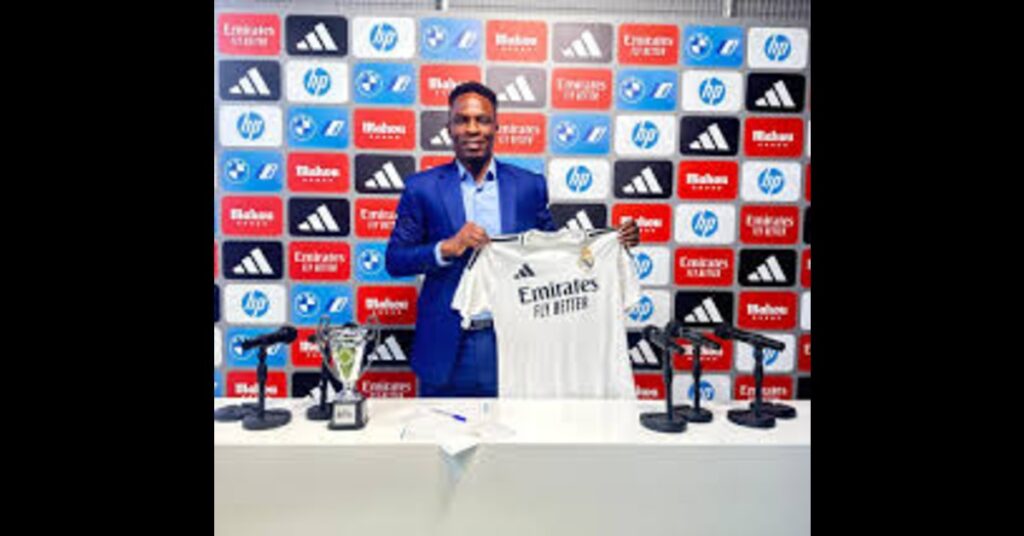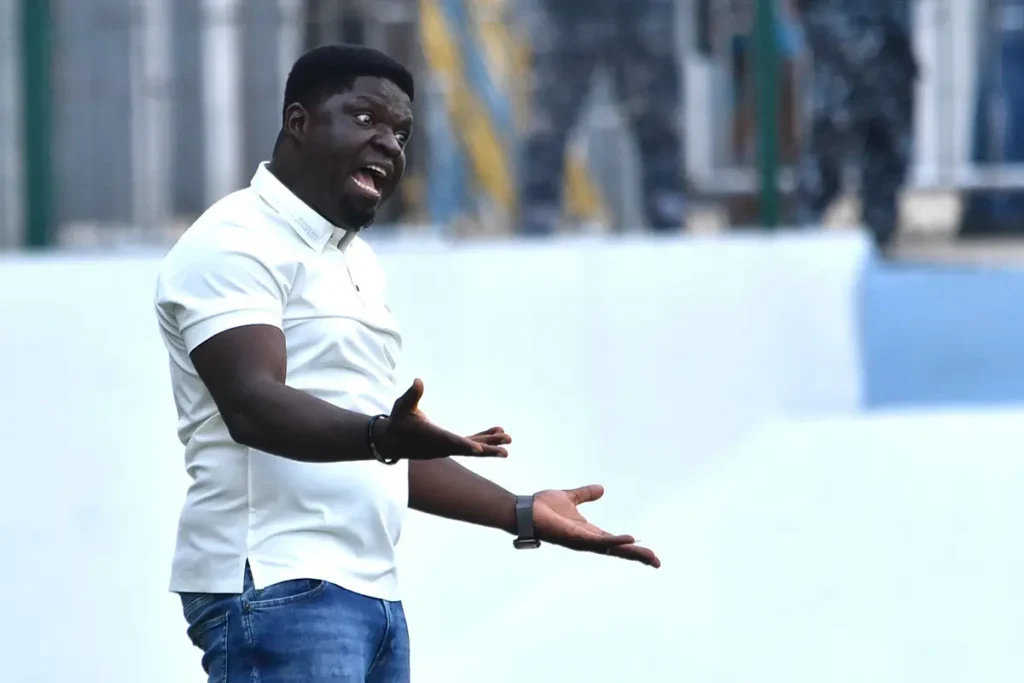
Daniel Ogunmodede, one of the most highly regarded young coaches in Nigeria, has completed his UEFA B coaching licence through the Scottish FA — a qualification that strengthens both his personal profile and the Super Eagles technical department.
Daniel Ogunmodede announced his achievement on Thursday, sharing the news of his UEFA B coaching licence completion on his X handle and expressing thanks to the Scottish FA for their professionalism throughout the course. The Super Eagles assistant coach, who at 45 is widely regarded as one of the brightest coaching minds in Nigerian football, described himself as an advocate for coaching education and framed the milestone in those terms rather than as a personal triumph alone.
The UEFA B licence is the third rung in UEFA’s coaching hierarchy, sitting above the introductory C licence and below the A and Pro licences. It qualifies holders to serve as head coaches of amateur clubs, youth teams up to age 16, and as assistant coaches at professional clubs. For Ogunmodede, who is already operating at the national team level as part of Eric Chelle’s Super Eagles setup, the licence formalises credentials that his track record had already demonstrated through results on the pitch.
What He Has Already Achieved Without It
The qualification comes after what has already been a remarkable coaching career. Ogunmodede guided Remo Stars to the NPFL title last season, one of the most impressive domestic coaching achievements in recent Nigerian football. The Ogun State club, operating with significantly smaller resources than some of their title rivals, overcame Rivers United and Enyimba under his stewardship in a league campaign that established him as a genuine talent in Nigerian football management. That title win earned him the call-up to join Chelle’s national team staff, and he was part of the coaching team at the 2025 Africa Cup of Nations in Morocco where Nigeria won the bronze medal.
His decision to pursue the UEFA B licence through the Scottish FA while managing the competing demands of international coaching duties reflects a discipline and seriousness about professional development that is sometimes undervalued in Nigerian football discourse. The choice of Scotland as the home association through which he completed the course is notable, given that the Scottish FA has a strong reputation for structured coaching education that punches above the size of its domestic league. Stay updated on all Nigerian coaching developments and football administration news at FootballInNigeria.com.ng. Fans can also support Nigerian football by registering on Bet9ja using the promo code YOHAIG for a welcome bonus on first deposit.
Why This Matters for Nigerian Coaching Culture
CAF recently sent a directive to all member associations requiring coaches at continental competitions to hold specific minimum qualifications. For head coaches at AFCON or CAF Champions League level, the minimum is a CAF A licence or equivalent confederation Pro licence. For assistant coaches, the minimum is a CAF B licence. Ogunmodede’s UEFA B licence is broadly equivalent to the CAF B level, meaning his credentials now meet the continental requirements for an assistant coach role at the highest level of African football.
More broadly, Ogunmodede’s pursuit of the licence sends a signal at a time when Nigerian football is grappling with a coaching education deficit. The call from Harrison Jalla and others about developing domestic coaching capacity over relying on foreign appointments is directly relevant here. Ogunmodede is exactly the kind of Nigerian coach whose development, if properly supported, could eventually lead to a homegrown head coach for the Super Eagles.
📌 Did You Know?
- Daniel Ogunmodede became the NPFL’s youngest-ever championship-winning coach when he guided Remo Stars to the title last season at the age of 44. His methods at Remo Stars drew praise from coaches and analysts across Nigeria for their tactical clarity and man-management approach.
- The Scottish FA’s coaching education programme is ranked among the top ten in UEFA’s annual coaching education assessments. Scotland produces a disproportionately high number of coaching licence holders relative to its population, a product of deliberate investment in football education infrastructure since the 1990s.
- The UEFA B licence course typically takes between 12 and 16 weeks to complete and requires a combination of online theory modules and in-person practical assessment sessions. Coaches must be actively coaching a team throughout the qualification period to demonstrate applied learning.
- Nigeria has produced only a handful of coaches with UEFA-level licences. Head coach Eric Chelle holds a UEFA Pro licence, the highest available, which he obtained through France’s football federation. Ogunmodede’s B licence now means Nigeria’s two most prominent coaching figures at national level both carry European-recognised qualifications.
- Remo Stars FC, who Ogunmodede led to the NPFL title, are based in Ikenne, Ogun State, and were founded in 1978. Despite being one of the smaller clubs in the league by historical standards, their recent investment in coaching and player development has made them a genuine title-contending outfit over the past three seasons.
- CAF’s coaching licence requirements, which Ogunmodede’s new qualification now satisfies for the assistant coach role, were formalised and strengthened in 2023 as part of a broader effort to raise the standard of coaching across African football at the elite level.
- The UEFA coaching hierarchy from bottom to top runs: Grassroots Certificate, C licence, B licence, A licence, Pro licence. Each level requires a minimum period of practical experience at the previous level before candidates can apply. Ogunmodede’s B licence now makes him eligible to pursue the A licence after accumulating the required coaching hours.