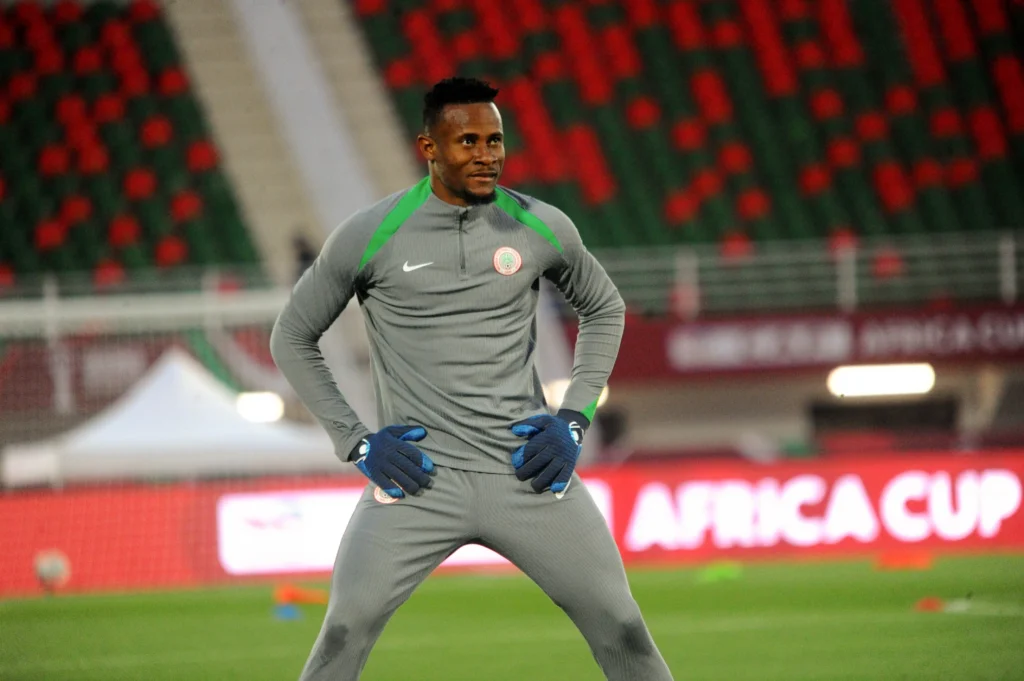
Eight days ago, Amas Obasogie was handed a three-month suspension by his Tanzanian club, and the Nigerian football community was confronted with an alarming headline. Today, Singida Black Stars have confirmed their disciplinary committee found no evidence of match-fixing. Obasogie is reinstated. The goals were mistakes. His name is clear.
The clearance comes eight days after the suspension was announced on February 27 and seven days after Obasogie issued his own public denial. The 26-year-old AFCON 2025 bronze medallist had described the allegations as deeply concerning and reaffirmed his commitment to the sport and to Nigeria. In his statement, he said he understood the severe consequences match-fixing carries for a national team representative, and that his integrity and career were too important to jeopardise through any such action.
What the Allegations Were Based On
The matches that triggered the investigation were Singida’s CAF Confederation Cup clash against Flambeau du Centre and two NBC Premier League fixtures against Pamba Jiji FC and Namungo FC. Fans, stakeholders, and club officials raised concerns following a series of goalkeeping errors in those matches that led to goals conceded. The club’s disciplinary committee was convened following the internal escalation of these concerns.
“The incidents that raised concerns have been determined to be technical errors within the game. The club’s disciplinary committee has now ruled that there is no evidence linking the goalkeeper to match-fixing.”
— Singida Black Stars CEO Jonathan Kassano, official statement, March 7, 2026
The Broader Context: Nigerian Goalkeepers Under Scrutiny
Obasogie’s case did not emerge in isolation. Earlier this season, Maduka Okoye, the Super Eagles first-choice goalkeeper and Udinese stopper, was briefly the subject of a betting probe following unusual wagering patterns identified around a Serie A fixture. That investigation was also resolved without formal charges, but the proximity of two betting or match-fixing-related inquiries involving Nigerian goalkeepers within the same season was not lost on the Nigerian football public.
Both cases were resolved in the players’ favour. Both also showed how quickly an allegation against a national team player, even one without formal charges or public evidence, can cause significant reputational damage before any ruling is issued. The speed with which Obasogie issued his personal statement on February 28, less than 24 hours after the suspension was announced, reflected an awareness that silence in cases of this kind can be misread as guilt.
The committee has cleared Obasogie. That marks the correct conclusion and, based on the available evidence, the only defensible one. A goalkeeper who makes errors in a CAF Confederation Cup match does not provide evidence of match-fixing. The facts only show a goalkeeper having a bad game, something that occurs at every level and at every stage of a football career.What is worth examining is the process. Singida Black Stars announced a three-month suspension publicly via their official X account, without releasing any specific details about which matches or incidents triggered the probe. That announcement, with no accompanying evidence or formal charge, was carried by every major Nigerian and East African sports outlet within hours. A Super Eagles goalkeeper was publicly associated with match-fixing allegations before any investigation had concluded, before any charge had been laid, and before any evidence had been shared.
The clearance today will receive a fraction of the coverage the suspension announcement received. That is the nature of football news. But it matters that the record is corrected clearly and completely: Amas Obasogie was investigated. No evidence of wrongdoing was found. He is cleared. He is available for selection for the Super Eagles. His name is clean.
FootballInNigeria.com.ng will continue to track Obasogie’s return to action at Singida and his availability for the Super Eagles March international window.
- Amas Obasogie, aged 26, was part of Nigeria’s 28-man squad for the 2025 Africa Cup of Nations in Morocco, where the Super Eagles finished third. He served as backup to first-choice goalkeeper Stanley Nwabali throughout the tournament and was part of the squad that defeated hosts Morocco and then Cameroon in the third-place play-off.
- Obasogie began his professional career at Bendel Insurance FC in the Nigerian Premier Football League, one of Nigerian football’s most historically significant clubs, based in Benin City, Edo State. His performances there earned him a move to Tanzanian football and eventually an international career with the Super Eagles.
- Singida Black Stars SC are based in Singida, a city in central Tanzania, and compete in the NBC Premier League, Tanzania’s top professional division. The club has historically been one of the smaller sides in Tanzanian football, but has invested in foreign players, particularly from West Africa, as part of a recent effort to improve its league standing.
- The CAF Confederation Cup, in which Singida faced Flambeau du Centre and where one of the disputed matches occurred, is Africa’s second-tier continental club competition after the CAF Champions League. Singida’s participation in the competition represents one of the club’s most significant continental achievements in recent years.
- Match-fixing in African football has been a subject of increasing concern for both CAF and FIFA, with betting irregularities identified across several leagues on the continent. The betting market surveillance systems operated by global watchdog organisations, including SportRadar and ENET, routinely flag suspicious wagering patterns in matches across African leagues and continental competitions.
- Maduka Okoye, Nigeria’s first-choice goalkeeper and Obasogie’s senior in the Super Eagles pecking order, was also the subject of a betting probe earlier this season involving his Serie A club Udinese. Like Obasogie, Okoye was cleared without a formal charge. The two cases occurring within the same season prompted discussion among Nigerian football journalists about the prevalence of betting scrutiny around Nigerian players.
- FIFA’s regulations on match-fixing carry some of the most severe penalties in football, including lifetime bans for players found guilty of involvement in match manipulation. The awareness of these consequences, which Obasogie himself referenced explicitly in his public statement, makes the false allegation of match-fixing one of the most damaging accusations a professional footballer can face, regardless of whether charges are ever formally laid.