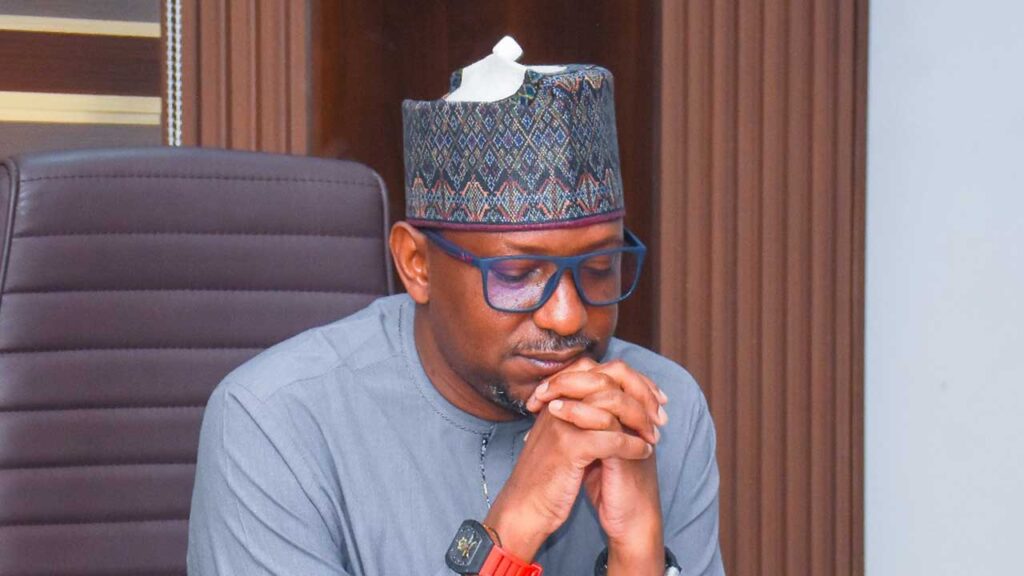
Shehu Dikko, Chairman of the National Sports Commission, has directly addressed that assumption and rejected it. In a statement to The Guardian, he said FIFA has not issued a verdict on either federation. “As far as we know, FIFA is yet to give its verdict. We are monitoring the situation closely. The fact that DR Congo appears among the six nations to compete for the final two spots in the playoff is not enough to jump to the conclusion that FIFA has thrown out Nigeria’s petition.”
— Shehu Dikko, NSC Chairman, speaking to The Guardian, March 2026
What Nigeria’s Petition Actually Alleges
The NFF filed its petition on December 15, 2025, alleging that DR Congo fielded six ineligible players during the African playoff final in Rabat last November. They argue that DR Congo’s citizenship law, which does not allow dual nationality, means players with European passports who did not surrender them before obtaining a Congolese passport were ineligible for FIFA clearance. Aaron Wan-Bissaka, Axel Tuanzebe, and Tephy Mavididi are named. DR Congo dismissed the petition, citing FIFA’s – not national – rules govern eligibility. This distinction forms the case’s legal grey area. FIFA’s judiciary must resolve it.If FIFA rules in Nigeria’s favour: DR Congo are removed from the playoff. Nigeria takes its place, face Jamaica or New Caledonia on March 31 in Guadalajara. A win takes Nigeria to the World Cup.
If FIFA rules against Nigeria: DR Congo proceed as scheduled. Nigeria does not participate in the playoffs. The World Cup is closed competitively, as Dikko previously acknowledged.
If FIFA rules a procedural fault without overturning the result: DR Congo could be fined or have FECOFA sanctioned, but the match outcome could stand. Nigeria would have no further recourse.
Timeline pressure: The playoff begins March 27. Any ruling must come before that date to have a practical effect. Every day that passes without a verdict narrows the window.
The Friendly Situation
As separately reported on FootballInNigeria.com.ng, the NFF’s planned four-team tournament in Amman has partially collapsed. Iran withdrew after the regional conflict escalated. The event may move to Europe. Unless FIFA reinstates Nigeria, a single friendly against Jordan in Europe is likely in March.There is also a DR Congo visa complication running in parallel. According to multiple reports, the Mexican embassy rejected a collective visa application from FECOFA after they submitted passports without proper documentation. Congolese players are reportedly still waiting to secure the visas needed to travel to Mexico, nearly three weeks before the playoff. Dikko chose not to address that development directly, noting only that things would change once a FIFA verdict was announced.
Dikko is right. Nigerians should remain calm and wait for the verdict. The listing of DR Congo in the draw does not mean FIFA has ruled on the matter. FIFA lists participating nations as they are known administratively until any judicial process changes the situation. That is how the organisation has operated in previous eligibility disputes. The listing is a practical placeholder, not a legal judgment.
What makes calm difficult to sustain is the timeline. Nigeria filed on December 15. It is now March 7. The playoff is on March 27. That is 82 days of waiting with no communication from FIFA, and only 20 days remaining before the verdict becomes irrelevant if DR Congo takes the field. Every additional day that passes without a ruling extends the anxiety and narrows the practical window for Nigeria to benefit from any favourable decision.
Dikko’s confidence is genuine and consistent with what he has been saying for months. His message to Nigerians is reasonable. But reasonable messages are hard to absorb when the stakes are this high, and the clock is running down.
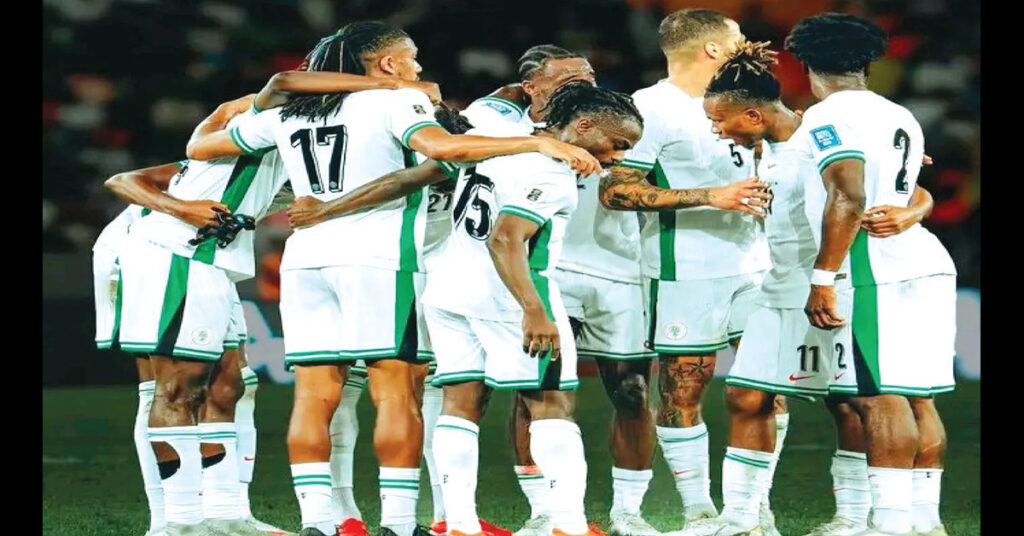
- Nigeria lost the African playoff final to DR Congo on penalties in Rabat, Morocco, on November 16, 2025. The match finished 0-0 after extra time, and the Super Eagles were eliminated 4-3 on penalties, missing out on Africa’s intercontinental playoff berth by the narrowest possible margin.
- Aaron Wan-Bissaka, named in Nigeria’s petition as one of the alleged ineligible players, previously represented England at the youth level before switching international allegiance to DR Congo. The NFF argues that his passport situation meant he could not legally receive FIFA clearance under Congolese domestic law on dual nationality.
- The six nations competing in the intercontinental playoff in Mexico are Bolivia, DR Congo, Iraq, Jamaica, New Caledonia, and Suriname. Two of these teams will qualify for the 2026 World Cup in the United States, Canada, and Mexico, joining the 46 teams that have already qualified through their confederation qualifying campaigns.
- The intercontinental playoff matches are scheduled to take place in Monterrey and Guadalajara, Mexico, from March 27 to 31, 2026. DR Congo are seeded as the highest FIFA-ranked team in the field and are scheduled to face the winner of the Jamaica vs New Caledonia semi-final on March 31.
- Nigeria’s 2026 World Cup qualification campaign began poorly under Jose Peseiro and then Finidi George, with the Super Eagles collecting only three points from their opening four matches. Eric Chelle was appointed and transformed the campaign, winning 14 of 18 points in the final six matches to reach the playoffs. The defeat on penalties followed that remarkable turnaround.
- FIFA has a CAS (Court of Arbitration for Sport) process for eligibility disputes that can take weeks or months. The NFF filed its petition in December, which means FIFA has had over 80 days to evaluate the case. The extended timeline has led many legal observers to suggest the case is genuinely complex and not being dismissed out of hand.
- Nigeria last participated in the FIFA World Cup in 2018 in Russia, where they reached the group stage before being eliminated by Argentina. It has now been eight years since Nigeria competed at a World Cup, the longest gap in the Super Eagles’ history since they first qualified for the tournament in 1994.