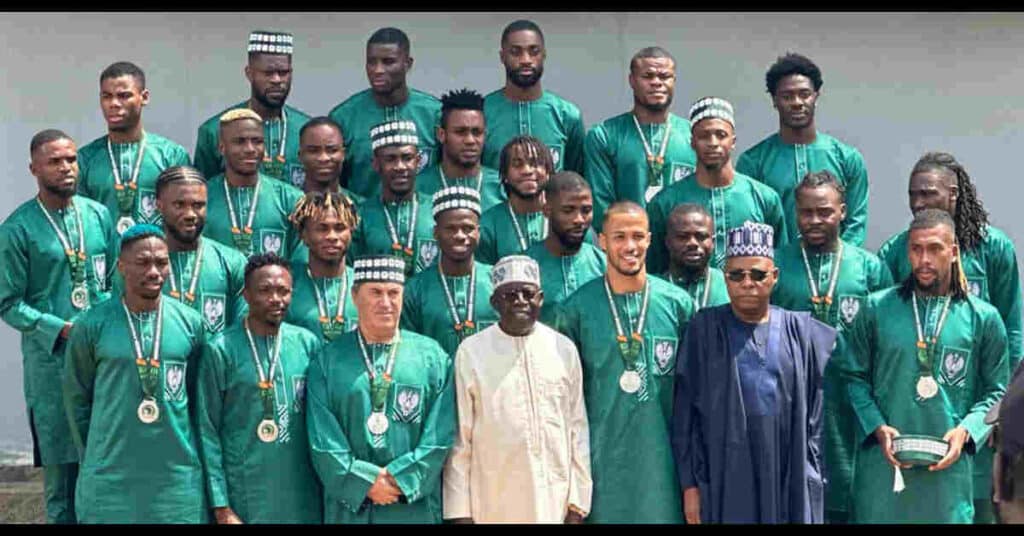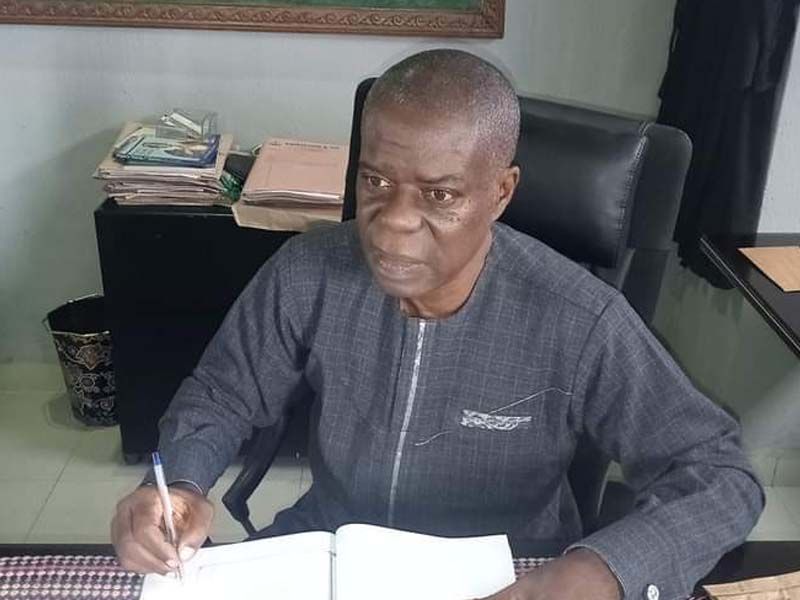
With a neighbouring African football federation boss now serving a life sentence for misusing FIFA grants, Harrison Jalla is asking Nigeria’s anti-graft agencies why the NFF has not faced the same scrutiny over funds that have similarly gone unaccounted for.
The timing could not be more pointed. Days after the Republic of Congo’s football federation president was handed a life sentence for embezzling over a million dollars in FIFA grants, the Chairman of the Professional Footballers Association of Nigeria Task Force, Harrison Jalla, has stepped forward to demand that Nigeria’s own anti-corruption agencies take a hard look at the NFF’s books.
Jalla’s message to the EFCC and ICPC is blunt: if a smaller African football federation can convict and jail its president for misusing FIFA money, there is no reason why Nigerian authorities cannot investigate similar allegations against the NFF. The Republic of Congo case, in which former federation president Jean-Guy Blaise Mayolas was convicted alongside two other senior officials over the diversion of roughly $1.3 million in FIFA development funds, has set a precedent that Jalla believes Nigeria should be willing to follow.
What the NFF Has Received and What It Has to Show
Jalla has been raising this alarm consistently since 2024. His documented position is that the NFF received somewhere in the region of $21 million in FIFA and CAF grants between 2014 and 2024, and that very little of that money produced any tangible football infrastructure in Nigeria. He has cited specific grants: $8.6 million from the 2014 World Cup cycle, $10 million from the 2018 World Cup cycle, $2.5 million from the FIFA Assisted Programme in 2015, plus three separate cycles of the FIFA Forward development programme estimated to total around $18 million by January 2026, plus regular CAF grants.
Against that backdrop, the NFF was carrying debts, including unpaid hotel bills and outstanding match bonuses owed to Super Eagles players, Falcons players, and coaches across all national team squads. The federation then reportedly received a government intervention fund of 12 billion naira approved by President Tinubu, which Jalla alleges has itself been subject to financial irregularities. The House of Representatives subsequently established a special investigative committee in late 2025 to audit NFF finances from 2015 to date, following a motion that referenced a $1.2 million FIFA grant allegedly spent on a substandard stadium facility in Birnin Kebbi.
Why the Congo Precedent Matters
The Republic of Congo case is not simply a cautionary tale from a distant federation. It is a directly comparable scenario. Mayolas and two other FECOFOOT officials were prosecuted after investigators found evidence of funds being diverted through fraudulent transactions and falsified financial records. The federation’s general secretary and treasurer both received five-year sentences. Mayolas himself got life. The entire process took eight months of investigation from the time prosecutors began examining banking records and financial documents.
Jalla’s argument is that the EFCC and ICPC already have both the mandate and the tools to do exactly what Congolese prosecutors did. The NFF’s financial history has been the subject of public scrutiny for years, with probes launched and then quietly shelved. Between 2018 and 2019, NFF officials including then-president Amaju Pinnick were subject to EFCC and ICPC investigations tied to alleged mismanagement of funds and sponsorship revenue. None of those investigations produced a prosecution that matched the gravity of the allegations. Follow the latest on Nigerian football governance at FootballInNigeria.com.ng, the home of Nigerian football news. Fans who want to back the Super Eagles in their upcoming friendlies against Iran and Jordan can register on Bet9ja using the Bet9ja promo code YOHAIG to receive a welcome bonus.
The Broader Picture for Nigerian Football
The demand for accountability does not exist in a vacuum. Nigeria is currently in the process of appealing FIFA’s rejection of its petition against DR Congo over player eligibility in the 2026 World Cup African play-off. That petition itself has put the NFF under the spotlight, with the federation’s legal and administrative capabilities being tested at the highest level. Critics of the NFF argue that years of financial mismanagement have weakened the federation structurally, leaving it unable to invest in the technical departments, scouting networks, and coaching infrastructure that would have made Nigeria more competitive at critical moments.
Jalla’s wider point cuts to the heart of this. Nigeria, he has argued, should by now be a hub for football development on the continent, not still sending delegations to Europe and South America to hire foreign coaches. The FIFA and CAF money that was supposed to build that foundation has, in his view, consistently failed to reach its intended destination. Whether the EFCC and ICPC will act on his latest call remains the question that Nigerian football fans are now asking alongside him.
📌 Did You Know?
- The Republic of Congo’s football federation president Jean-Guy Blaise Mayolas was convicted of diverting $1.3 million in FIFA development funds in a case that took eight months from the start of investigations to sentencing. His life sentence, handed down in March 2026, is believed to be the harshest punishment ever given to an African football federation official for financial crimes.
- FIFA’s Forward Programme, which Jalla references as a key source of unaccounted NFF funds, allocates $500,000 per year to each of FIFA’s 211 member associations for football development projects. Over three cycles, that adds up to $1.5 million per cycle per country, meaning Nigeria should have received around $4.5 million from Forward alone by 2026, separate from other grants.
- The NFF’s $1.2 million Birnin Kebbi Stadium project, cited in the House of Representatives motion, became a flashpoint in 2025 when photos of the facility circulated on social media showing what critics described as inadequate construction that bore no resemblance to a million-dollar investment.
- Harrison Jalla is a retired Nigerian professional footballer and former chairman of the Professional Footballers Association of Nigeria. His Task Force role was specifically created to advocate for the welfare and rights of current and former professional footballers in Nigeria, many of whom are owed significant sums in unpaid wages and bonuses.
- Nigeria has not appeared at a FIFA World Cup since 2018 in Russia, when the Super Eagles were eliminated in the group stage despite beating Iceland. If the NFF appeal against FIFA’s rejection of the DR Congo petition fails, the next realistic opportunity for World Cup qualification begins with the 2030 cycle.
- The ICPC (Independent Corrupt Practices and Other Related Offences Commission) and the EFCC (Economic and Financial Crimes Commission) are Nigeria’s two primary anti-graft agencies, established in 2000 and 2003 respectively. Both have previously investigated NFF officials but neither has secured a conviction specifically tied to FIFA grant misuse.
- FIFA suspended the Republic of Congo’s football federation during the period that the corruption case was being investigated, causing the national team to forfeit two 2026 World Cup qualifying matches. Nigeria’s NFF has so far avoided any FIFA suspension despite multiple allegations of financial irregularities spanning more than a decade.