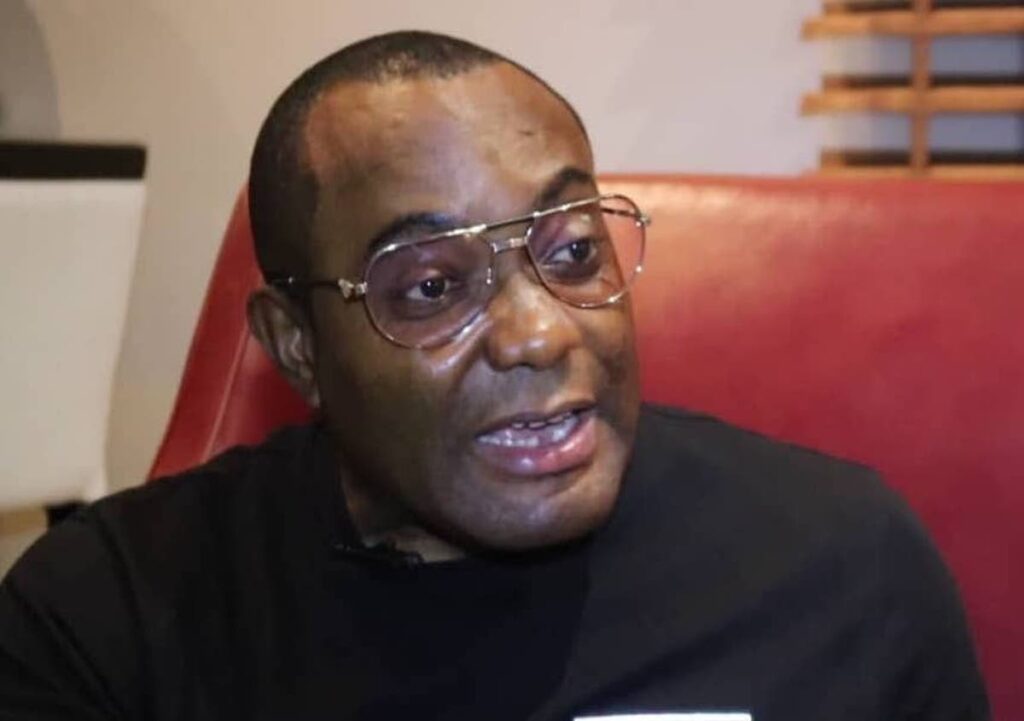
Ebi Ezekiel Egbe, one of Africa’s foremost sports infrastructure voices, has urged Nigerian football to treat the NFF Elective Congress in September 2026 as a genuine reset — not another occasion where the right words are spoken and nothing changes.
The September 2026 NFF Elective Congress in Lafia, Nasarawa State is still six months away, but the voices shaping the conversation around it are already making themselves heard. Ebi Ezekiel Egbe, CEO of Monimichelle Sports and a prominent figure in African sports infrastructure, has used the momentum of the recent NFF Extraordinary General Assembly in Yenagoa to call for an “integrity-first” approach to the upcoming elections. His message is simple and direct: whoever emerges from the September congress must be committed not just to results on the pitch, but to building a governance structure that private investors, international partners, and Nigerian football fans can actually trust.
“Nigeria cannot be exempt from the positive wave of reforms aimed at curbing corruption in African football,” Egbe said following the Yenagoa assembly. “As a key stakeholder, we must embrace transparency, accountability, and integrity to strengthen the game and restore public trust.” The language is measured, but the implication is pointed — Nigerian football has a credibility deficit, and the September elections are the clearest opportunity in years to begin addressing it. Nigerian football fans who want to engage with the sport financially this season can also find the latest Bet9ja promo code on the dedicated resource page ahead of the Super Eagles’ upcoming fixtures.
Why the Yenagoa EGM Matters for the September Vote
The NFF Extraordinary General Assembly held in Yenagoa earlier this week ratified the roadmap for the September elections in Lafia and confirmed the venue and timeline. The presence of FIFA and CAF representatives at that assembly sent a signal about the stakes involved. Both bodies have strengthened their governance oversight requirements considerably in recent years, and national federations that fail to align their structures with those standards face the prospect of suspension from international competition — a fate Nigeria has experienced twice already, in 2014 and again in 2024.
Egbe’s call builds directly on the message delivered by National Sports Commission Chairman Shehu Dikko at the Yenagoa assembly, where Dikko called for an urgent review of the NFF’s 2010 Statutes. Together, the two interventions sketch out what a credible reform agenda for the September vote would need to address: updated statutes, transparent election processes, broader stakeholder representation, and a financial model that reduces dependence on government funding by attracting private sector partners. As reported by FootballInNigeria.com.ng, the Yenagoa EGM was the first formal step in what is expected to be a busy and politically charged calendar leading up to the September congress. Fans who follow NPFL clubs as well as the Super Eagles can find the Bet9ja bonus code to explore current welcome offers on Nigeria’s most widely used betting platform.
Private Investment Will Only Follow Governance Reform
Egbe was particularly clear on the commercial dimension of the argument. Nigerian football has enormous untapped revenue potential — the supporter base is vast, the appetite for the Super Eagles is intense, and the NPFL sits in a market that several serious media and sponsorship entities have quietly assessed as significantly undervalued. But none of that potential converts into actual investment without governance structures that make commercial partners confident their money will be managed responsibly and their brand associations protected.
This is not a theoretical concern. Several corporates who have explored Nigerian football partnerships in recent years have walked away not because the audience was too small, but because the administrative environment was too unpredictable. A federation with transparent procurement, clear accountability lines, publicly audited finances, and elections that are seen as legitimate by all stakeholders changes that calculation. Egbe’s argument is that the September elections present precisely that opportunity, and squandering it with another round of business as usual would be a historic mistake given the reform momentum building across CAF and FIFA right now.
CAF’s Continental Crackdown Is Raising the Bar for Everyone
Egbe specifically pointed to CAF’s intensifying effort to address administrative lapses across the continent as context for his intervention. Under President Patrice Motsepe, CAF has moved to implement stricter governance audits for member associations, and federations that cannot demonstrate clean administrative records face growing consequences in terms of funding, representation, and access to CAF programmes. Nigeria, as one of the continent’s largest and most prominent football nations, cannot afford to be seen as a laggard in this environment. The September NFF elections are not just an internal Nigerian matter — they are a statement about where the country’s football governance stands relative to a continental standard that is actively rising. New Bet9ja users interested in following Nigerian football through the elections and beyond can visit the Bet9ja’s welcome offer page for the most current bonus information available on the platform.
📌 Did You Know?
- Monimichelle Sports, the company Ebi Egbe leads, specialises in sports infrastructure across Africa, with particular expertise in turf installation and stadium surface management — making Egbe one of the most practically experienced voices on the physical side of African football development rather than a purely administrative commentator.
- Lafia, the capital of Nasarawa State, where the NFF Elective Congress is scheduled for September 26, 2026, is the same city where Nasarawa United play their home matches. The choice of venue reflects Nasarawa’s growing profile in Nigerian football administration circles.
- The NFF has been suspended by FIFA twice in its history — in 2014 and 2024 — on both occasions for government interference in football governance. A credible September election that produces demonstrably independent leadership would be the most effective way to prevent a third suspension.
- CAF President Patrice Motsepe, whose governance reform agenda Egbe cited as context for his call, took office in March 2021 and has since overseen the most significant structural reorganisation of African football administration in the organisation’s history, including the creation of new compliance mechanisms for member associations.
- The NFF’s 2010 Statutes, which National Sports Commission Chairman Shehu Dikko called for in a review at the Yenagoa EGM, predate the most significant changes to FIFA’s own governance framework, which were introduced following the 2015 FIFA corruption scandal that led to the resignations of several senior FIFA officials.
- Nigeria’s football economy — including NPFL broadcasting rights, jersey sales and stadium revenues — is estimated to be significantly smaller than comparable West African markets like Ghana despite Nigeria having a population more than four times the size, pointing to the scale of commercial development possible with improved governance.
- The September 2026 NFF elections will take place in the same year as the FIFA World Cup in North America, a tournament Nigeria failed to qualify for. The proximity of the elections to the World Cup creates an unusual political dynamic in which the incoming NFF leadership will immediately face pressure to explain the qualification failure and map a credible path back to the 2030 tournament.

